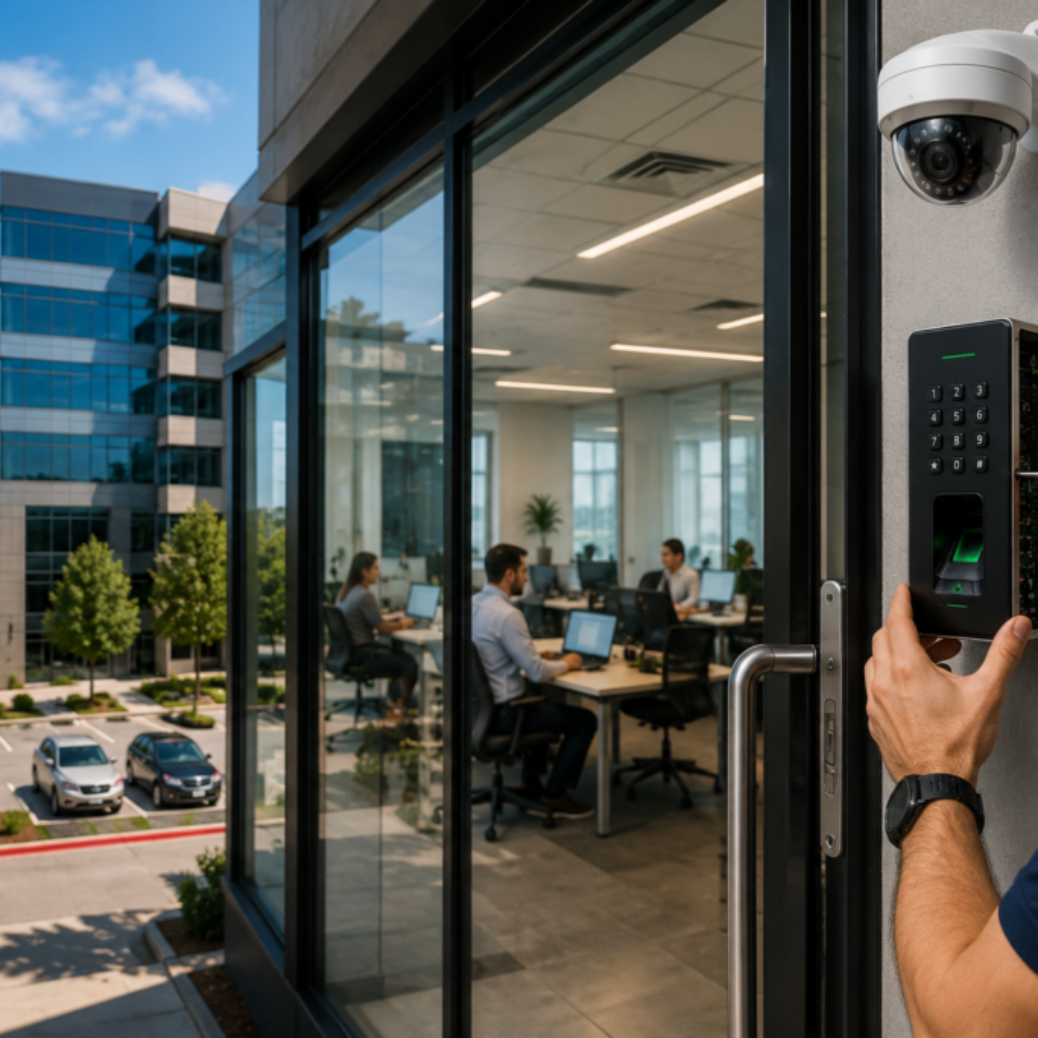
Plano is not just growing. It is one of the most competitive commercial markets in all of Texas. With corporate headquarters, retail corridors, medical campuses, warehouses, and distribution centers all expanding rapidly, the demand for reliable commercial security camera installation in Plano has never been higher.
But here is the reality most buyers discover too late: picking the wrong system, the wrong camera type, or the wrong installer does not just waste money. It leaves your property, employees, and inventory exposed at the exact moments you need protection most.
This guide breaks down everything a Plano business owner needs to know before making a decision, from camera types and must-have features to real installation costs and what separates a professional installation from a rushed one.
Why Plano Businesses Cannot Afford to Skip Commercial Security Cameras
Plano sits within one of the highest-growth business corridors in the entire country. That growth creates opportunity, but it also creates exposure. Retail theft, after-hours vandalism, unauthorized access, and internal shrinkage are realities that affect businesses across every industry in the DFW metro.
According to FBI property crime data , commercial properties across Texas report thousands of burglary, theft, and vandalism incidents every year, the majority of which occur after business hours when surveillance is weakest. These are not isolated incidents limited to high-crime areas. They affect office parks, retail strips, healthcare facilities, and warehouses in fast-growing cities like Plano just as readily as anywhere else.
The National Retail Federation’s annual retail security survey consistently documents tens of billions in annual inventory losses across the country, with a significant portion attributed to external theft and organized retail crime that professional surveillance systems directly deter and help prosecute.
What modern business security camera systems offer goes far beyond simple recording. Today’s commercial surveillance solutions include real-time AI-powered alerts, license plate recognition, remote live access from any device, and seamless integration with access control and alarm systems. When these tools are designed and installed correctly, they become one of the most productive investments a Plano business can make.
Types of Security Cameras for Businesses in Plano, TX
The single most important decision before any commercial camera installation in Plano begins is matching the camera type to your actual operational needs. A camera that works brilliantly in a retail showroom may be completely wrong for a parking structure or a warehouse loading dock.
Dome Cameras
Dome cameras are designed for discreet, indoor coverage where the direction the lens is facing is intentionally difficult to determine. They integrate cleanly into ceiling infrastructure and work well in offices, hotel lobbies, restaurants, and healthcare waiting rooms. Their low-profile design makes them difficult to tamper with, which adds a layer of physical security beyond the footage they capture.
Bullet Cameras
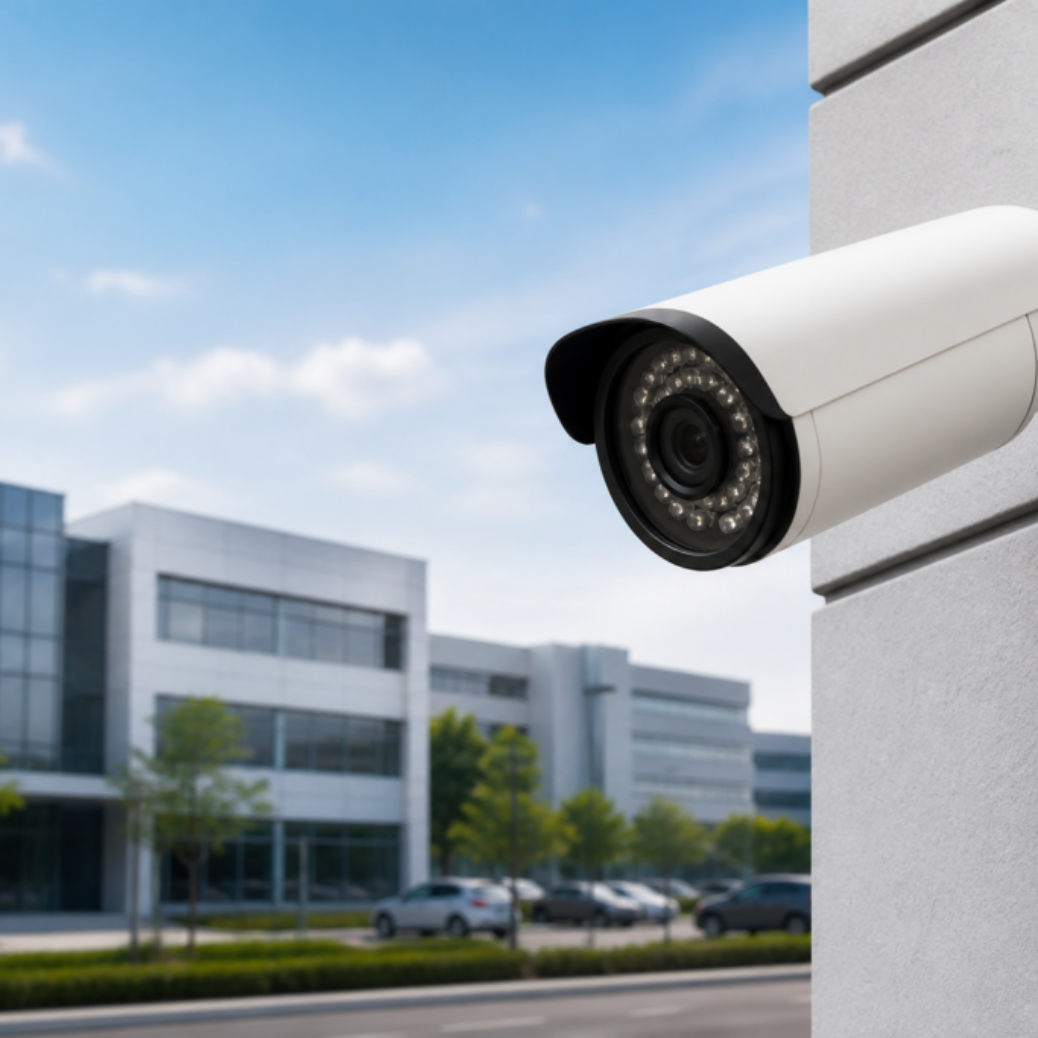
When visibility is part of the deterrence strategy, bullet cameras are the right tool. Their elongated, directional design signals clearly to anyone approaching that the area is actively monitored. Parking lots, building perimeters, loading entrances, and rear access points benefit most from bullet cameras. They are weather-rated for Texas outdoor conditions and can be fitted with long-range lenses to capture detail at greater distances.
PTZ (Pan-Tilt-Zoom) Cameras
PTZ cameras serve large open spaces where a single fixed camera cannot provide adequate coverage. Warehouses, distribution centers, manufacturing floors, and large campuses all benefit from PTZ deployment because operators can pan across wide areas, tilt to follow activity, and zoom in to capture precise detail. Some advanced PTZ cameras include automated tracking that follows motion without operator input.
IP vs. Analog Cameras
Analog cameras represent older technology that transmits video over coaxial cable to a DVR. IP cameras transmit digital data over Cat6 network cabling to an NVR and offer dramatically better image quality, scalability, remote access, and integration flexibility. For any business security camera installation in Plano that involves more than a handful of cameras or any remote viewing requirement, IP is the only practical choice in today’s market.
AI-Powered Smart Cameras
AI-powered cameras represent the current frontier of commercial surveillance. These systems go beyond motion detection to analyze behavior, recognize license plates, flag loitering, identify unusual vehicle patterns, and send prioritized alerts based on the risk level of what is detected. They reduce the burden on monitoring staff and make large-scale deployments manageable without a dedicated security team watching screens all day.
Also Read – Top Areas in Dallas That Need Business Surveillance Systems
What Evidence Level Do You Actually Need? Plan Before You Buy
This is the question that every professional commercial security camera installer in Plano should be asking before a single camera goes on a wall, and if they are not asking it, that is a red flag.
Different locations within the same building require different levels of visual detail. Planning around your evidence goals rather than just camera count is what separates a system that performs when it matters from one that just technically records.
Detection: Confirms that something moved in the scene. Enough to trigger an alert, not enough to identify a person. Ideal for perimeter fencing, large open yards, and parking lot edges.
Recognition: Distinguishes a person from a vehicle or animal. Captures general characteristics like clothing color, size, and direction of movement. Good for loading docks and building entrance overviews.
Identification: Captures facial detail sufficient to identify a known individual. Required at man doors, access-controlled entrances, and reception desks. This level demands proper camera angle, adequate lighting, and a resolution spec matched to the actual distance from the lens to the subject.
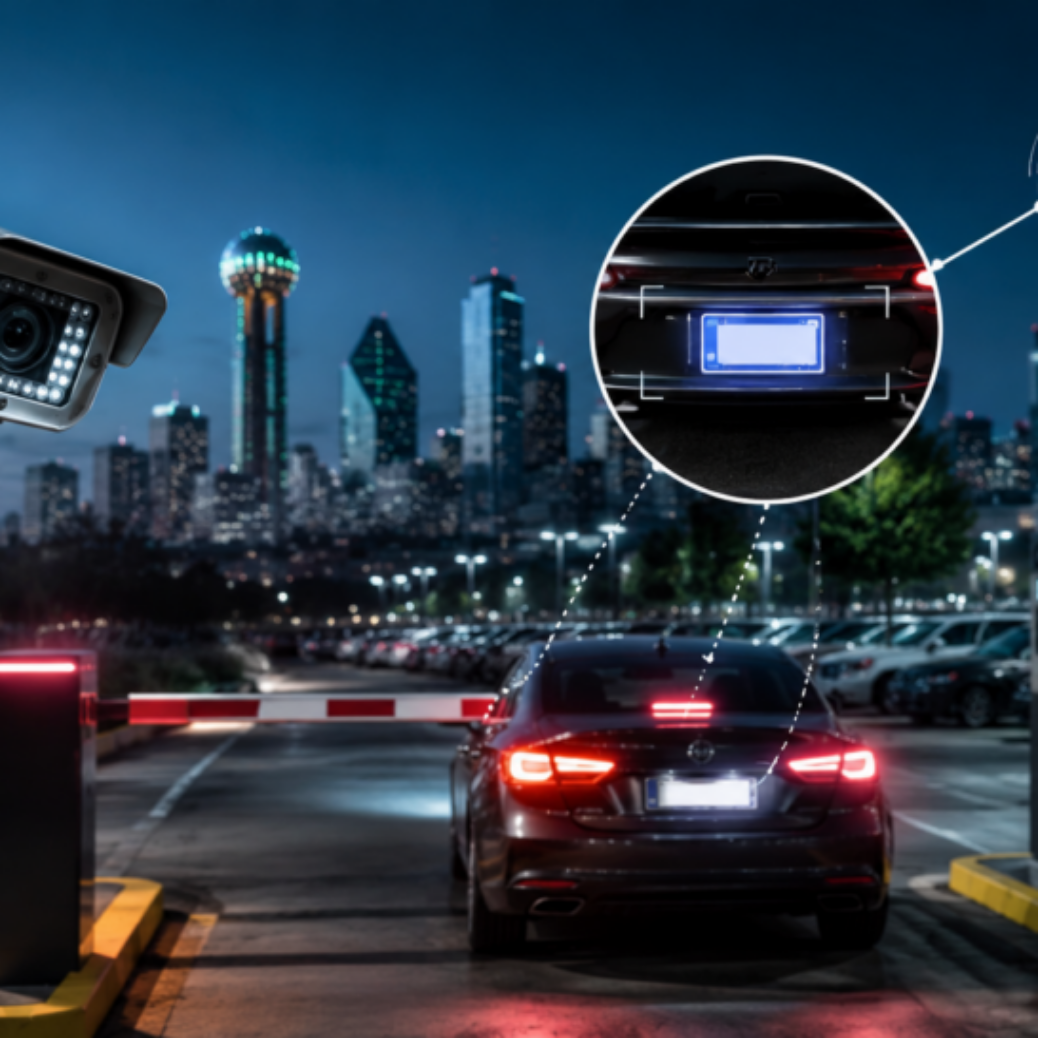
License Plate Capture: Requires tight field of view, correct mounting angle, and sufficient resolution to read plate characters clearly enough for legal use. Gate entries, drive lanes, and parking garage ingress points need this standard.
The pixel density required for each goal differs significantly. A wide-angle camera mounted too high may look like it is covering an entrance but fail every time someone needs to identify a face from its footage. Planning your system around evidence goals from the start eliminates this problem entirely.
Key Features to Look for in a Commercial Security Camera System
Hardware specs matter, but the features that define day-to-day usability often come down to how the system is designed as a whole.
High-Resolution Imaging
Minimum 2MP resolution is a baseline for any professional commercial surveillance system today. For entrance identification and license plate capture zones, 4MP to 8MP cameras are more appropriate. Resolution only delivers its full value when the camera’s field of view, mounting distance, and lighting are all designed together. A high megapixel count on a camera pointing at the wrong angle or distance still produces unusable footage.
Night Vision and Low-Light Performance
The majority of break-ins, vandalism incidents, and after-hours unauthorized access events happen when natural light is absent. A camera that produces sharp, identifiable footage in full daylight but delivers grainy, washed-out images at 2 AM offers only partial value. Look for cameras with true wide dynamic range (WDR), infrared illumination rated for the actual distances in your coverage zones, and supplemental lighting consideration for areas where IR alone is insufficient.
Remote Access and Mobile Monitoring
Modern IP security camera systems allow business owners and managers to view live feeds and recorded footage from any smartphone or computer. For businesses with multiple locations across Plano and the broader DFW area, this eliminates the need to physically travel to a site to verify an incident. Ensure the system you choose has a stable, manufacturer-supported mobile app and clear user permission controls so the right people see the right feeds.
Motion Detection and Intelligent Alerts
Basic motion alerts notify you that something moved. Intelligent motion alerts filter out irrelevant triggers like headlights, shadows, and small animals, and send prioritized notifications only when actual risk criteria are met. This distinction matters significantly for businesses without dedicated monitoring staff. Alert fatigue caused by constant false triggers causes managers to stop responding to notifications entirely, which defeats the purpose of the system.
Cloud Storage, Local Storage, and Hybrid Options
Storage architecture is one of the decisions that affects ongoing cost and retrieval reliability most directly. Local NVR-based storage gives you full control, no recurring fees, and fast local playback. Cloud storage offers off-site redundancy and multi-location centralization. A hybrid approach delivers the benefits of both. Your retention window requirement, site activity level, and number of cameras should all inform this decision before hardware is ever purchased.
Integration with Access Control and Alarm Systems
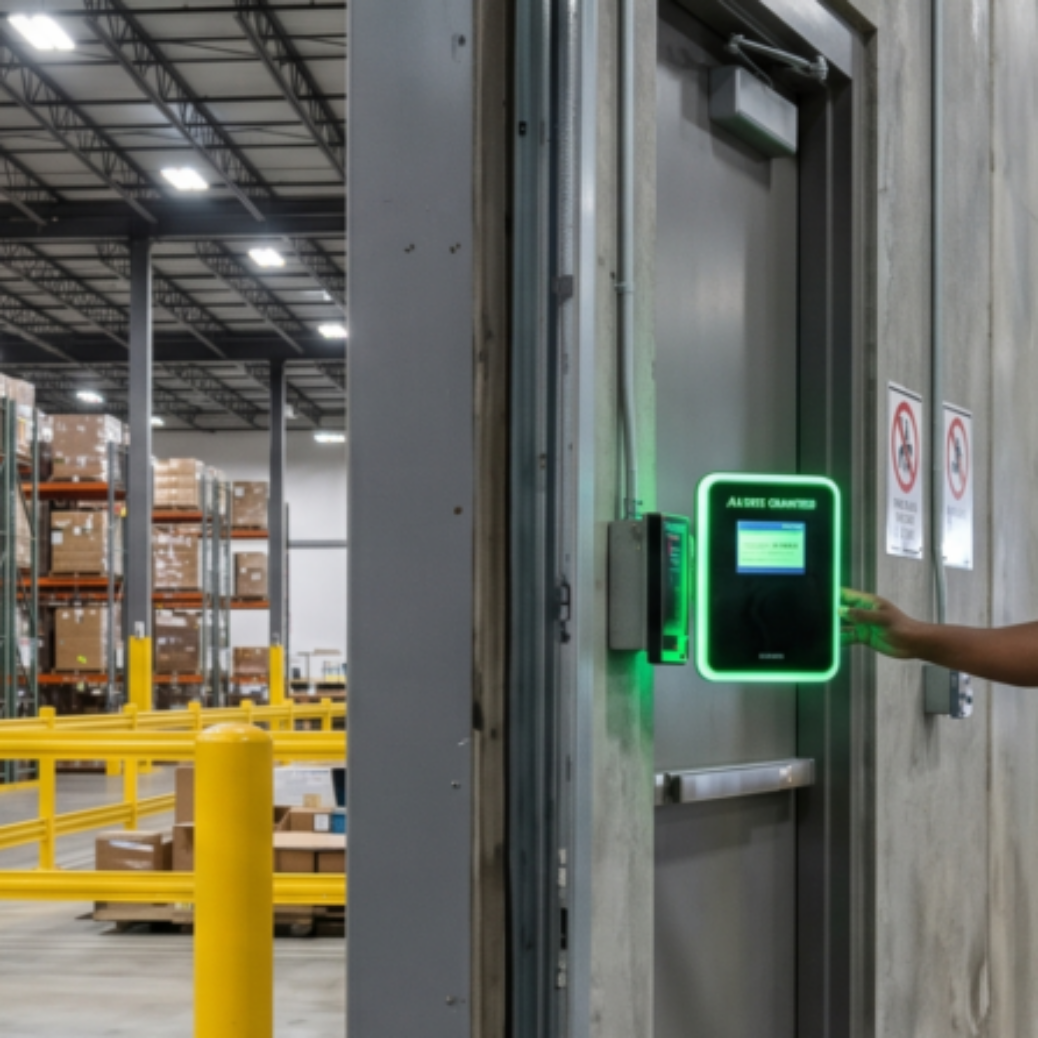
A commercial security system that operates in isolation from your access control infrastructure misses one of the most powerful capabilities available today: event correlation. When your surveillance footage is timestamped and indexed against access control events, you can pull up video of exactly who badged through a specific door at a specific time in seconds. When an alarm triggers, your monitoring system can automatically pull up live footage of the zone where the alarm originated.
The Commercial Security Camera Installation Process in Plano, TX
Professional security camera installation in Plano, TX is a structured process, not a same-day job that ends when the last camera is mounted. Buyers who understand the steps involved are far better positioned to evaluate installer proposals and hold installers accountable.
Site Assessment and Security Risk Analysis
Before any camera is specified, a professional installer walks every area of your property. Entry and exit points, blind spots, high-risk zones, existing lighting conditions, ceiling types, and cable pathway access are all evaluated. This assessment is what makes custom design possible and what separates professional installations from generic off-the-shelf deployments.
Custom System Design and Camera Placement Planning
Based on the site assessment and your evidence goals, a layout is developed that specifies exactly which camera type goes where, at what height, at what angle, and why. This design accounts for overlapping coverage zones, mounting hardware requirements, and future expansion needs. A professional design document also identifies cabling routes and power sources before a single tool comes out.
Cabling and Network Infrastructure
This is consistently the most underestimated phase of commercial camera installation in Plano, TX. Hard ceilings, finished interior walls, long cable runs to remote exterior locations, and lift requirements for high-mounted cameras all add labor time and cost. Cat6 or Cat6A cabling, PoE switches, patch panels, and proper cable management are the foundation that determines whether your system performs reliably for years or becomes a maintenance problem within months.
Camera Mounting and Hardware Installation
Cameras are mounted at specified heights and angles, with weatherproof junction boxes for exterior installations, appropriate brackets for ceiling and wall conditions, and UV-rated components where Texas sun and heat are factors. Professional installers use manufacturer torque specs and sealants. A rushed installation that skips these details creates problems that may not surface until months later when it is too late to address them under warranty.
System Configuration, Testing, and Commissioning
Every camera is focused and aimed precisely. Night performance is verified on-site rather than assumed. Remote access is tested on actual devices used by your team. Alert thresholds are configured. Recording schedules and retention settings are confirmed against actual storage capacity. All cables are labeled at both ends. Credentials and documentation are handed off to the appropriate personnel. This commissioning step is what separates a working system from one that technically records but fails when footage is actually needed.
Staff Training
The best commercial surveillance system in the world delivers diminished returns if the people responsible for managing it do not know how to retrieve footage, respond to alerts, adjust recording settings, or add users. A professional installer provides training as a standard part of project delivery.
What Does Commercial Security Camera Installation Cost in Plano, TX?
Cost is the question every business owner asks first, and the honest answer requires context. According to the Bureau of Justice Statistics, property crime costs U.S. businesses billions in losses every year, making professional surveillance infrastructure one of the most financially sound preventive investments a commercial property owner can make. Industry data consistently shows that businesses with professionally designed and installed systems experience significantly fewer security failures and lower long-term maintenance costs compared to self-installed or contractor-grade deployments.
For Plano businesses, professionally installed IP camera systems in commercial settings typically range from $400 to $900 per camera for standard HD deployments before site-specific factors are applied. Here is what actually drives the final number:
Number of cameras: More cameras mean more hardware, more cabling, more configuration time, and more storage capacity. The relationship is not strictly linear since infrastructure costs are partly fixed, but each additional camera adds measurable cost.
Camera type and specification: PTZ cameras and AI-powered smart cameras carry higher hardware costs than fixed dome or bullet cameras. Specialty optics for license plate capture or long-range coverage add further cost above standard camera pricing.
Installation complexity: A camera mounted under a drop ceiling with a short cable run to a nearby PoE switch is a straightforward install. That same camera on an exterior wall requiring conduit, a lift, and a long cable run to the equipment room is a significantly different scope with significantly different labor costs.
Cabling and network infrastructure: Cat6 runs, new PoE switching, conduit, patch panels, and equipment racks all represent real labor and material costs that are frequently absent from initial price estimates and become surprises later.
Storage requirements: More cameras, higher resolution, and longer retention windows all require more storage capacity whether local, cloud-based, or hybrid.
Night scene requirements: When existing lighting is insufficient for camera performance, supplemental IR illuminators or lighting fixtures become part of the project scope and add cost that a camera-count estimate will never capture.
Common Mistakes Plano Businesses Make With Security Camera Installations
Understanding what goes wrong helps buyers avoid the same traps.
Poor camera placement: Cameras mounted for convenience rather than coverage leave blind spots in exactly the areas where incidents are most likely to occur. Entrances, exits, cash handling areas, and inventory storage zones should always anchor the placement plan.
Ignoring night performance during planning: A camera that looks outstanding in a daytime walkthrough can produce nearly unusable footage at night if field of view, distance, and lighting design have not been verified for low-light conditions. Always request night performance testing before final acceptance.
Underestimating storage requirements: Businesses frequently underspecify storage based on camera count without accounting for resolution settings, scene activity levels, and actual retention needs. Running out of storage causes the system to automatically overwrite critical footage.
Choosing equipment based on price alone: Budget hardware often means compromised image quality, unreliable firmware, limited integration capability, and poor manufacturer support. When footage is actually needed for an insurance claim or legal matter, these compromises become expensive mistakes.
Skipping system integration: Security cameras that do not connect to your access control or alarm infrastructure miss the operational efficiency and investigative power that integrated systems provide.
Lack of ongoing maintenance: Cameras accumulate dirt and debris. Firmware needs periodic updating. Exterior cable connections can loosen over time in Texas heat cycles. A professional service agreement ensures your system stays operational and current.
How to Choose the Right Commercial Security Camera Installer in Plano
The quality of your installation matters as much as the quality of your equipment.
Verifiable commercial experience: Residential camera experience does not translate directly to commercial environments. Ask for specific commercial project references in Plano or the broader DFW area and follow up on them.
Proper Texas licensing: Texas requires licensed contractors for security system installation. Verify that your installer holds a valid Texas DPS Alarm Systems Contractor license and that individual technicians hold current registration credentials before work begins.
Custom design as a standard offering: Every commercial property has different vulnerabilities, layouts, and operational requirements. An installer who offers a generic proposal without a site assessment first is not providing professional-grade service.
Manufacturer certifications: Certifications from Axis, Avigilon, Hanwha, Genetec, Milestone, or similar enterprise manufacturers indicate that the installer has been trained on the specific equipment being deployed.
Integration capability: Confirm that the installer has direct experience integrating surveillance systems with access control, alarm monitoring, and video analytics platforms.
Post-installation support: Ask specifically about warranty coverage, response time for service issues, and whether a maintenance agreement is available. Systems that fail and sit unrepaired are a liability.
How Commercial Security Cameras Integrate With Your Broader Security Ecosystem
A standalone camera system is a starting point. A fully integrated security ecosystem is where serious protection begins.
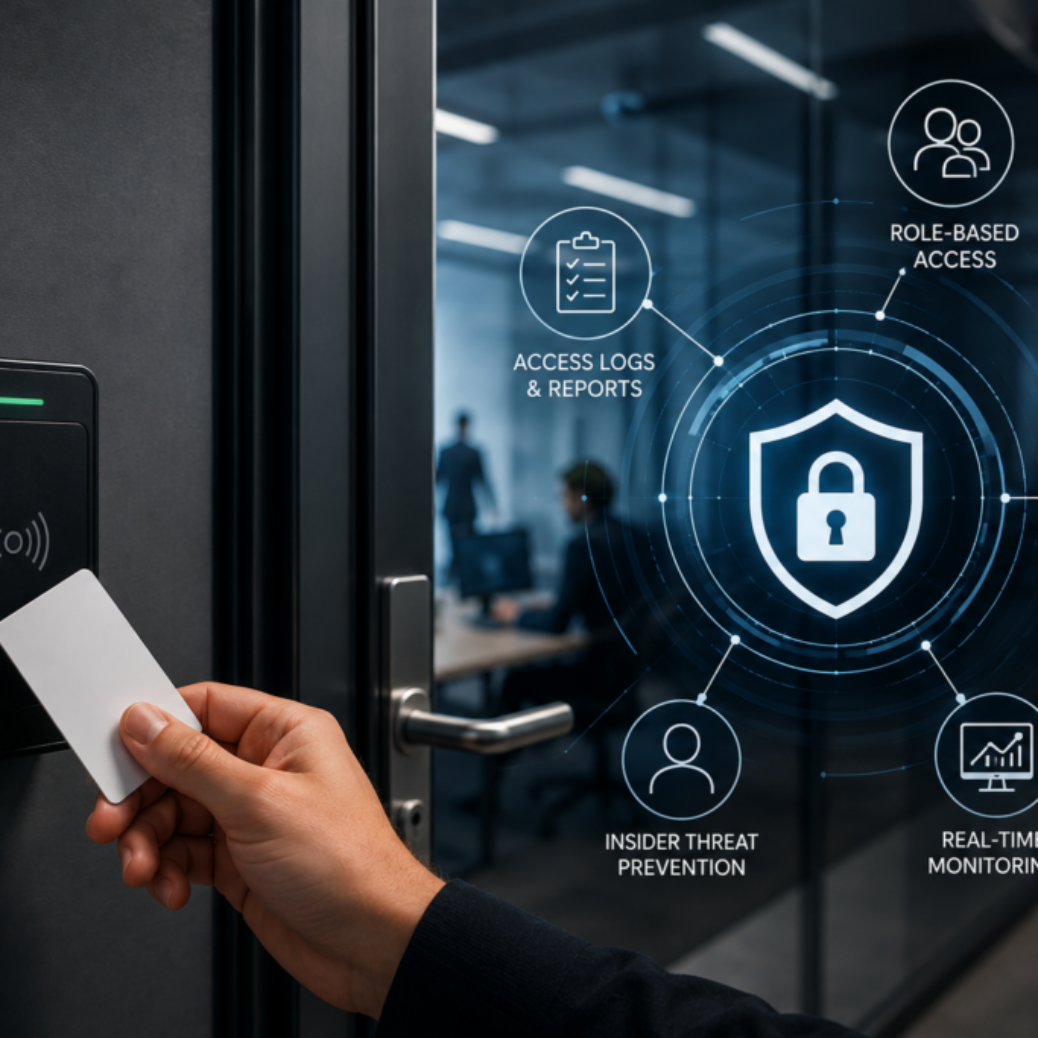
Access control integration connects your surveillance footage directly to door entry events. Every time a credential is used to open a door, the timestamp links automatically to camera footage from that location. Investigations that would otherwise take hours are resolved in minutes.
Intrusion detection integration triggers automatic camera pulls to the zone where a sensor is activated, giving monitoring personnel immediate visual context rather than just an alarm notification with no visual confirmation.
Video analytics layered onto existing camera infrastructure can add license plate recognition, occupancy counting, queue monitoring, and behavioral anomaly detection without replacing existing hardware in many deployments.
Remote virtual guard services use your installed camera infrastructure to provide live, human-monitored surveillance during after-hours periods, with two-way audio capability to verbally challenge unauthorized individuals before they complete an intrusion.
Plano-Specific Considerations for Commercial Security Systems
Texas heat and direct sun exposure degrade exterior camera housings, junction box seals, and cable jacket materials faster than in moderate climates. Specify IP66 or IP67-rated exterior cameras and UV-resistant conduit and cable management components for any outdoor installation in the Plano area.
The density of corporate campuses in Plano, particularly along the Legacy corridor and the US 75 business parks, creates environments where multi-building surveillance infrastructure, fiber backbone runs between buildings, and wireless point-to-point links for remote structures are common requirements. These add scope that a basic camera-count estimate will never capture.
Plano’s proximity to Allen, Frisco, and McKinney also means that many businesses operate multiple locations within the broader north Dallas corridor. A surveillance platform that supports centralized multi-site management from a single login eliminates the inefficiency of logging into separate systems for each property.
Get the Installation Right the First Time
Commercial security camera installation in Plano, TX is not a commodity purchase. The system you install today will be the foundation your business relies on for the next several years for evidence documentation, loss prevention, employee safety, insurance support, and operational oversight.
Getting it right means choosing the correct camera types for each zone, designing around your actual evidence goals, ensuring the cabling infrastructure supports long-term reliability, and working with a licensed installer who provides ongoing support after the project closes.
The security experts at Security in DFW design custom surveillance solutions for Plano businesses of every size and industry. Contact our team today to schedule a professional site assessment and get a system designed around your specific needs.
FAQs
What is the average cost of commercial security camera installation in Plano, TX?
Professionally installed IP camera systems in commercial settings typically range from $400 to $900 per camera for standard HD deployments. Total project costs vary based on camera count, installation complexity, cabling requirements, and storage architecture. High-ceiling installations, exterior runs requiring conduit, and specialty cameras for license plate capture or long-range coverage all add to this baseline figure.
How many cameras does a typical Plano business need?
There is no universal number. A professional site assessment identifies the specific entry points, blind spots, high-risk zones, and coverage gaps that determine the right camera count for your property. A small retail location might be well served by six to eight cameras. A warehouse or corporate campus might require significantly more.
What type of security camera is best for a commercial business in Plano?
IP cameras with a minimum resolution of 2MP are the professional baseline today. The specific form factor, whether dome, bullet, PTZ, or AI-powered smart camera, depends on the coverage zone, evidence goal, and environmental conditions of each individual location within your property.
How long should commercial security footage be retained?
Most Plano businesses retain footage for a minimum of 30 days. Higher-risk environments or businesses subject to regulatory requirements may need 60 to 90 days of retention. Storage planning must account for camera resolution settings, scene activity levels, and recording mode to accurately size the storage system before purchase.
Can I monitor my business cameras remotely from my phone?
Yes. Modern IP-based commercial surveillance systems provide mobile app access to live feeds and recorded footage from any smartphone or tablet. Multi-site businesses can view all locations from a single login with permission controls that restrict each user to relevant feeds.
Do security cameras reduce commercial insurance premiums in Texas?
Many commercial insurance carriers in Texas offer premium reductions for businesses with professionally installed and monitored surveillance systems. Contact your insurance broker with documentation of your system specifications and monitoring arrangement to explore what discounts may apply to your policy.
How does AI-powered video analytics improve commercial security?
AI analytics move beyond passive recording to active threat detection. These systems identify loitering near entrances, flag vehicles in restricted zones, recognize license plates, and send prioritized alerts when specific risk criteria are met, reducing false alarm fatigue and enabling faster response without requiring dedicated full-time monitoring staff.
What is the difference between an NVR and a DVR for commercial security?
An NVR works with IP cameras over a network and supports higher resolution, greater scalability, and remote access. A DVR works with older analog cameras over coaxial cabling and has significant limitations in resolution, flexibility, and integration capability. For any modern commercial security camera installation in Plano, NVR-based or cloud-managed systems are the professional standard.
Can security cameras be integrated with access control systems?
Yes, and this integration is one of the highest-value capabilities in modern commercial security. When properly configured, every door access event is linked to timestamped camera footage from that location, enabling fast and accurate investigation without manual footage searching across hours of recordings.
How do I verify that a commercial security camera installer in Plano is properly licensed?
Confirm that the company holds a valid Texas Department of Public Safety Alarm Systems Contractor license. Verify that individual technicians hold current Texas DPS registration credentials. Ask for references from comparable commercial projects in the Plano or DFW area and confirm that the installer provides a written design proposal based on an actual site assessment rather than a generic camera-count quote.