-
 May 27, 2026
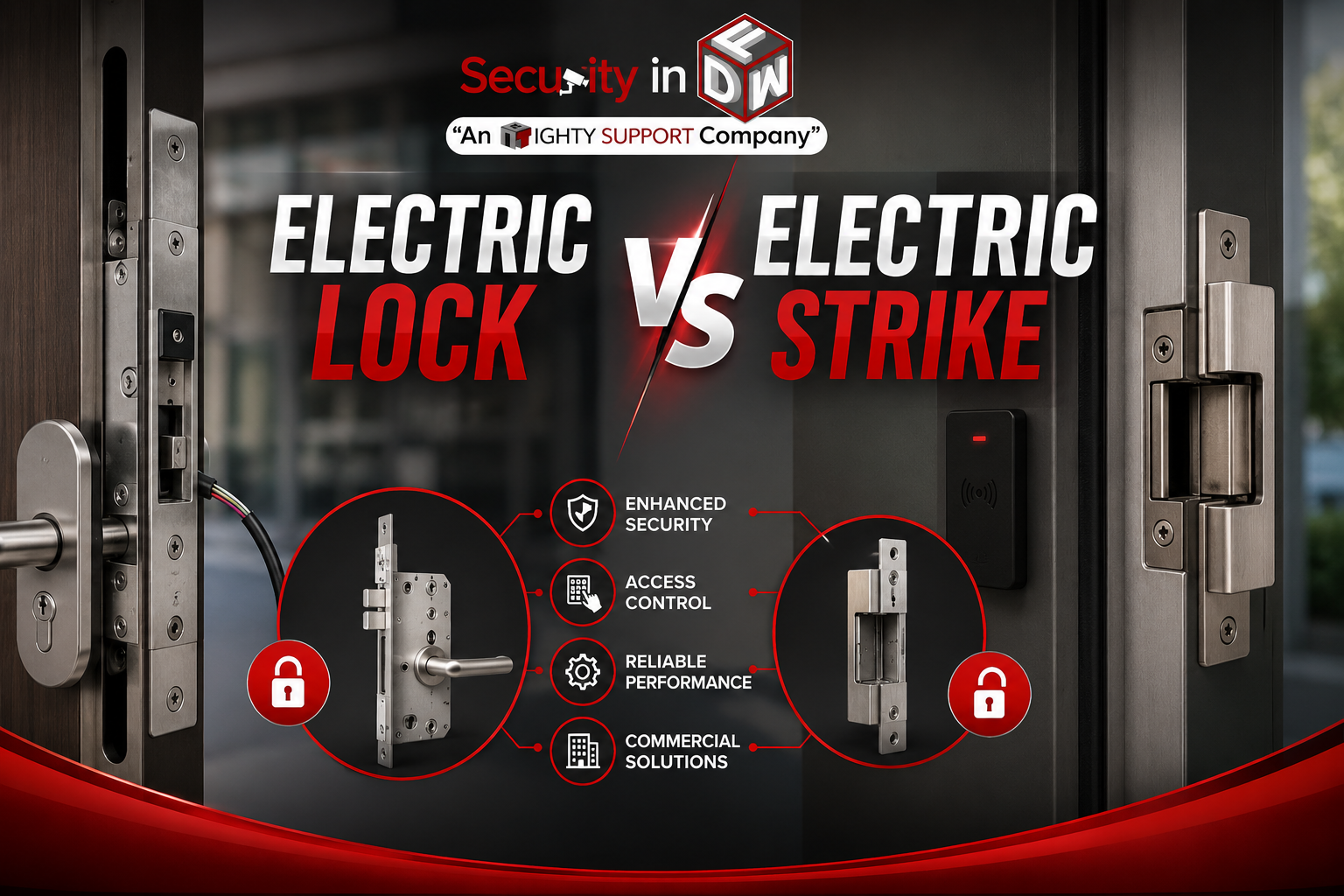
Electric Lock vs Electric Strike: Which Is Right for Your Commercial Door?
If you’re replacing hardware on exterior commercial doors and you have budget for it, go with an electrified mortise lock. If you’re retrofitting an existing door on a tighter budget and security demands are moderate, an electric strike can work fine with the right setup.
That said, the “which is better” debate misses the real question: better for what? These two systems solve access control differently. Getting the wrong one installed means callbacks, compatibility headaches, and sometimes a full rip-and-replace. This guide covers everything you need to make a confident decision the first time.
What Is an Electric Strike?
An electric strike replaces the fixed strike plate on a door frame. Instead of the latch bolt sitting in a static metal pocket, the strike has a hinged keeper that releases when an electrical signal is sent. The lock on the door itself stays mechanical. You’re not electrifying the lock; you’re electrifying the frame.
When the strike is energized (or de-energized, depending on the fail mode), the keeper swings open and the latch bolt is free to pass through. The door opens. When power cuts or the signal stops, the keeper returns to position and the latch is captured again.
How it’s triggered: Card readers, keypads, intercoms, fobs, or remote release buttons all work. The electric strike just needs a signal from your access control system to release the keeper and let the door open.
Common Electric Strike Applications
- Interior office doors
- Secondary entrances with moderate foot traffic
- Retrofit installations where cutting into a door is not practical
- Paired openings (double doors)
- Doors with automatic operators
What Is an Electrified Mortise Lock?
An electrified mortise lock (also called an electric mortise lock or electrified lockset) is a full lock body that sits inside a pocket cut into the door. It looks like a regular mortise lock from the outside. Inside, there is a solenoid or motor that controls whether the handle retracts the latch. The latch itself stays engaged; what changes is whether turning the handle does anything.
The wiring runs through the door rather than the frame. This requires either an electrified power transfer hinge, a door loop, or a wired raceway to carry current from the frame to the door.
Popular models include the Schlage L-series electrified mortise locks (such as the L9492) and the Sargent 8271, both of which are widely used in commercial access control installations.
Common Electrified Mortise Lock Applications
- Exterior commercial doors
- Schools, childcare facilities, healthcare buildings
- High-traffic secure entrances
- Doors requiring a clean, tamper-resistant appearance
- New construction where door prep can be specified upfront
Electric Strike vs Electric Mortise Lock: Side-by-Side Comparison
|
Feature |
Electric Strike |
Electrified Mortise Lock |
|
Where it installs |
Door frame |
Inside the door |
|
What it controls |
Strike keeper (frame side) |
Handle/latch retraction |
|
Security level |
Moderate |
Higher |
|
Visibility |
Noticeable on frame |
Concealed, looks standard |
|
Installation complexity |
Lower |
Higher |
|
Hardware cost |
Lower |
Higher |
|
Door prep required |
Minimal |
Mortise pocket + raceway/hinge |
|
Works with auto operators |
Yes |
No (latch does not retract freely) |
|
Fail-safe option |
Yes (some models) |
Yes (some models) |
|
Fail-secure option |
Yes (standard) |
Yes (standard) |
|
Fire-rated door compatibility |
Fail-secure only |
Both modes (per local AHJ) |
|
Compatibility concerns |
Must match specific mortise body |
Self-contained, fewer issues |
Security: Which One Actually Keeps People Out?
This is where most people get the wrong answer from their contractor.
Electric strikes have a real vulnerability: they are mounted on the door frame, visible and accessible. A latch protector plate helps, but without one, it is possible to slip a thin tool between the door and frame and manipulate the keeper. The latch is also exposed to external pressure, which is why many installers on high-security applications add surface-mounted latch guards or use strikes specifically rated for exterior doors.
Electrified mortise locks do not have this problem. The mechanism is internal to the door. There is no keeper on the frame to tamper with. The latch bolt engages fully within the strike pocket, and because the lock body is buried inside the door, there is no exposed hardware to attack from outside. The Builders Hardware Manufacturers Association (BHMA) grades hardware on security, durability, and finish; Grade 1 mortise hardware consistently outperforms Grade 1 cylindrical hardware in forced-entry resistance.
One thing locksmiths and access control professionals agree on: never use a cylindrical lock on an exterior commercial door. The mechanism, regardless of grade, can be forced with basic tools. Mortise locks are internal, heavily built, and engage the door more deeply. That is why every serious commercial installation on exterior doors uses a mortise body.
Installation: What Your Contractor Is Not Telling You
When a contractor pushes hard for an electric strike, there are two legitimate reasons and one less legitimate one.
Legitimate reasons:
- The doors are already hung and prepped for cylindrical locks; cutting a mortise pocket is expensive and time-consuming
- The door material makes mortise installation difficult (hollow-core doors, some aluminum frames)
Less legitimate reason:
- It is faster and easier for the installer, and the margin is better
On an existing door, fitting an electric strike for doors into the frame takes a fraction of the time compared to installing an electrified mortise lock on a door not prepped for one. On new construction, the cost difference shrinks considerably because the mortise pocket can be specified at the factory before the door is even delivered.
For the installation itself, an electrified mortise lock requires:
- A mortise pocket cut to spec in the door edge
- A power transfer device: electrified hinge (EPT hinge), continuous hinge with power transfer, or a door loop
- Proper wiring run from the access control panel to the door
- Compatibility check between the lock body, the power transfer device, and the access control hardware
There is a compatibility problem that consistently gets overlooked when pairing electric strikes with mechanical mortise locks. The strike keeper must physically match the latch bolt profile of the mortise body. Mismatches cause the door to not latch properly, or to latch but not release cleanly when the strike fires. This is a documented, recurring problem on retrofit jobs. An electrified mortise lock avoids this entirely because the mechanism is self-contained.
Fail-Safe vs Fail-Secure: Getting This Wrong Can Violate Code
Fail-secure means the lock stays locked when power is cut. Doors remain secured during a power outage. This is the default for most electric strikes and many mortise locks, and it is required on fire-rated doors per most building codes. If a fire alarm cuts power to a fire-rated door, that door must not fly open.
Fail-safe means the lock releases when power is cut. Doors open freely during a power outage. This is required on certain egress paths, emergency exits, and in some healthcare applications where patients or staff must be able to exit freely.
The critical rule for fire-rated doors: A fail-safe electric strike is not allowed on a fire-rated door because there is no latching support during a power outage. An electrified mortise lock in fail-safe mode is permitted on fire-rated doors because positive latching is maintained even when the electronics release the handle function.
Before specifying anything on a fire-rated door opening, check with your Authority Having Jurisdiction (AHJ). Local fire marshals and building inspectors have final say, and requirements vary by state and municipality.
Cost Breakdown: What to Actually Expect
Hardware costs alone do not tell the story. The total installed cost depends on door condition, door material, and how much prep work is needed.
Electric strike installed cost (per door, rough range):
- Hardware: $150 to $400 (HES, Adams Rite, Rutherford Controls are common brands)
- Labor: 1 to 2 hours
- Total: $300 to $700 depending on door condition
Electrified mortise lock installed cost (per door, rough range):
- Hardware: $500 to $1,200+ (Schlage L-series, Sargent 82-series, Von Duprin)
- Power transfer hinge: $150 to $400
- Labor: 3 to 5 hours on new or prepped doors; significantly more on retrofits
- Total: $900 to $2,500+
For a 10-door project like the one referenced in real-world contractor bids, the difference can run $5,000 to $10,000 or more in hardware and labor alone. For exterior doors on a childcare facility where security matters, that difference is worth it. For interior low-traffic doors, electric strikes are perfectly adequate.
Also Read: 8 Questions to Ask Before Hiring an Access Control Systems Installer
Magnetic Locks: The Third Option Worth Knowing
Electromagnetic locks (maglocks) work differently from both options above. A magnet mounts to the door, an armature plate mounts to the frame, and when power flows, the magnetic field holds them together with significant force (typically 600 to 1,200 lbs holding force).
Maglocks are fail-safe by nature: cut the power, and the door opens. This makes them ideal for fire exits and automatic doors but disqualifies them from most exterior security applications where you need fail-secure operation.
They are also entirely surface-mounted, which means fast and simple installation on glass doors, aluminum storefront frames, and other door types where neither mortise prep nor standard strike installation is practical.
The Door and Hardware Institute (DHI) publishes detailed guidance on electromagnetic lock selection and code compliance, which is worth referencing before specifying maglocks on egress doors.
Which One Should You Choose? A Decision Framework
Choose an electrified mortise lock if:
- Doors are exterior, especially on schools, healthcare facilities, or childcare centers
- Security is a primary concern
- Doors are new construction or you have budget for proper prep
- You want a clean, tamper-resistant appearance
- Fire-rated doors need fail-safe mode
- Long-term reliability matters more than upfront cost
Choose an electric strike if:
- Doors are interior or low-to-medium security applications
- Doors are existing and retrofitting a mortise body is impractical
- Budget is tight and the security profile allows for it
- Doors use an automatic door operator
- Paired openings (double doors) where frame mounting is the only practical option
Choose a maglock if:
- Doors are glass, aluminum storefront, or unusual frame construction
- Fail-safe is required and fail-secure is not
- The door sees high traffic and you want low mechanical wear
- Interior secured areas where power backup can be ensured
Brand Recommendations Worth Knowing
For electrified mortise locks: Schlage L-series, Sargent 8200-series, Von Duprin mortise bodies, and Corbin Russwin ML-series are all well-regarded. Schlage tends to have better parts availability and lower repair costs. Sargent runs slightly more expensive but holds up well in high-traffic applications.
For electric strikes: HES (Hardware Electronic Systems), Adams Rite, Rutherford Controls, and Folger Adam make reliable products. Avoid cheap no-name strikes on exterior doors. The geometry must match your latch bolt profile exactly; always verify before ordering.
For power transfer devices: Assa Abloy’s EPT hinges and Securitron door loops are commonly specified. The middle hinge is the typical location for an EPT hinge, which is less expensive than a full continuous hinge with power transfer.
Final Thought
Electric strikes have their place. They are not a bad product. They are just the wrong product for some doors, and experienced specifiers and locksmiths consistently say the same thing: on exterior commercial doors where security matters, an electrified mortise lock is the better long-term investment.
If you are managing a facility where children or vulnerable people are present, the marginal cost of doing it right the first time is worth it. Retrofitting later costs more and means your doors are underprotected in the meantime.
Get quotes for both options on new construction. Make the contractor show you why an electric strike is better for your specific doors, not just cheaper for their crew to install.
FAQs
What is the main difference between an electric strike and an electric mortise lock?
An electric strike is mounted on the door frame and releases the latch keeper to allow entry. An electrified mortise lock is built into the door itself and controls whether the handle retracts the latch. Both enable remote access control, but the mechanism and security profile are different.
Are electric mortise locks more secure than electric strikes?
Yes, in most cases. Electrified mortise locks are internal to the door with no exposed frame-side hardware to tamper with. Electric strikes are mounted on the frame, making them more accessible. A proper latch guard reduces but does not eliminate the risk on electric strike installations.
Can I use an electric strike on an exterior commercial door?
You can, but it requires a latch protector plate, a properly matched strike and latch bolt profile, and ideally a higher-security strike rated for exterior use. Most experienced hardware specifiers prefer electrified mortise locks on exterior doors, especially in schools and healthcare facilities.
What does fail-safe and fail-secure mean for electric locks?
Fail-secure locks stay locked when power is cut. Fail-safe locks release when power is cut. Exterior security doors typically use fail-secure. Emergency egress doors may require fail-safe. Fire-rated door requirements vary; always consult your local Authority Having Jurisdiction (AHJ).
Can an electric strike be used on a fire-rated door?
Only in fail-secure mode. A fail-safe electric strike is not allowed on fire-rated doors because the door would be unlatched during a power outage. An electrified mortise lock can be used on fire-rated doors in either mode because it maintains positive latching regardless of power status.
How much does it cost to install an electrified mortise lock vs an electric strike?
Electric strikes typically run $300 to $700 installed per door. Electrified mortise locks, including power transfer hardware, run $900 to $2,500 per door depending on door prep, door material, and labor rates. The gap narrows significantly on new construction where mortise prep is done at the factory.
What is a power transfer hinge and do I need one for an electrified mortise lock?
A power transfer hinge (EPT hinge) carries electrical current from the door frame to the door, feeding the electrified lock. You need some form of power transfer device for an electrified mortise lock: an EPT hinge, continuous hinge with power transfer, or a door loop. Your installer should specify this as part of the hardware package.
What brands make the best electrified mortise locks?
Schlage (L-series), Sargent (8200-series), Von Duprin, and Corbin Russwin are the most commonly specified brands in commercial applications. Schlage is often recommended for parts availability and service. Always verify ANSI/BHMA grade ratings when comparing products.
Can I use an electrified mortise lock with an automatic door operator?
No. Electrified mortise locks do not retract the latch electrically, so they cannot be used with automatic door operators that need to swing the door freely. Electric strikes or maglocks are the correct choice for automatic door opener applications.
My contractor is recommending an electric strike instead of an electrified mortise lock. Should I push back?
Ask them why. If the doors are existing and retrofitting a mortise body is impractical, the recommendation may be legitimate. If the doors are new construction on exterior security-critical openings, it is worth asking for a quote on electrified mortise locks and comparing the total installed cost. The hardware price difference often closes on new construction, and the long-term security and reliability difference is real.
Our Service Area
- Anna
- Ardmore
- Aubrey
- Bridgeport
- Briar
- Bonham
- Caddo Mills
- Carrollton
- Celina
- Commerce
- Corinth
- Denton
- Keller
- Justin
- Emory
- Farmersville
- Forney
- Fort Worth
- Frisco
- Gainesville
- Granbury
- Lantana
- Lewisville
- Lavon
- Little Elm
- McKinney
- Murphy
- Nevada
- Northlake
- Pilot Point
- Plano
- Princeton
- Quinlan
- Rhome
- Rockwall
- Royse
- Sachse
- Saginaw
- Sanger
- Sherman
- Sulphur Springs
- Sunnyvale
- Terrell
- Van Alstyne
- Prosper
- Wylie
- Weatherford