-
 Jul 17, 2026
Five Dallas Business Security Gaps That Put Your Firm at Risk Today
Most DFW businesses that get hit were not unprotected. They had an alarm, some cameras, maybe a keypad on the back door. What they had was a collection of gaps between those systems, and the loss walked straight through one of them.
The five gaps that put business security in Dallas at risk are consistent across industries: an alarm that cannot get police dispatched under the city’s verified response rule, cameras that record but are never watched or placed where theft actually happens, keys and door codes spread across current and former employees, an internal theft problem with no interior monitoring, and separate systems that do not talk to each other. Every one of these is fixable, most for less than owners expect, and the rest of this article shows you how to find and close each one in your own building.
Why Does Business Security in Dallas Carry Higher Stakes Than Most Cities?
Two local facts change the math for Dallas business owners. The property crime rate here runs well above the national average, and the city’s police response rules mean a poorly configured alarm may protect nothing at all.
FBI data released in 2025 put Dallas at roughly 3,350 property crimes per 100,000 residents, about 90% above the national average, with commercial burglaries concentrated in overnight hours. You can check current numbers for your own area through the Dallas Police Department’s crime reports, which break offenses down by police division and beat.
The second fact is the one national security articles never mention. Since 2006, Dallas has operated a verified response policy for commercial burglar alarms: police are not dispatched to a commercial burglar alarm unless criminal activity is verified first, by video, audio, an eyewitness, or guard response. Unpermitted alarm sites get no response at all. In this city, how your systems are configured decides whether they function, not just how much you spent on them.
Gap 1: Can Your Alarm Actually Get Police Dispatched?
Many Dallas businesses pay monthly monitoring for an alarm that cannot summon an officer. If your commercial burglar alarm has no video or audio verification and no current city permit, it fails the two conditions Dallas requires for dispatch.
This is the gap owners discover after a break-in, when the monitoring center called their cell phone and nobody else. The fix is specific: confirm your alarm permit is active, then add verification. Pairing the burglar alarm with interior cameras lets the monitoring center confirm a live intruder and request a verified dispatch. Suburbs run their own rules, so a Plano or Frisco location needs its own permit check, not a copy of the Dallas setup.
Cost of the gap: a burglary loss plus the monitoring fees you paid for nothing. Cost of the fix: often under $1,500 if cameras already exist, since verification is largely configuration and monitoring-plan changes.
Gap 2: Do Your Cameras Watch Where Theft Actually Happens?
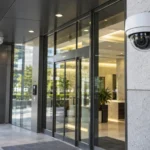
Cameras fail Dallas businesses in two predictable ways: they point at the wrong places, and nobody looks at them until after a loss. A recorded crime is evidence; it is not prevention.
The placement pattern repeats across the Metroplex. Warehouses in Garland and Mesquite cover customer entrances and leave dock doors, where inventory actually leaves, unwatched. Restaurants cover the dining room and skip the back hall where the office and liquor storage sit. Retail covers the sales floor and misses receiving.
Texas adds a failure mode of its own: heat. Consumer-grade cameras mounted under a west-facing DFW eave face 140-degree-plus enclosure temperatures every summer, and they die or degrade within a couple of seasons. Commercial lines from manufacturers like Avigilon, Hikvision, and Vivotek are rated for it; the bargain kit from a marketplace listing is not.
Close this gap with three moves: cover the money paths (docks, receiving, cash handling, exits), spec commercial-grade hardware for exterior positions, and connect cameras to monitoring or analytics so someone or something watches in real time. Modern analytics flag after-hours motion in defined zones, which turns cameras from a recorder into a tripwire.
Gap 3: How Many People Can Open Your Doors Right Now?
If you cannot answer that question with a number, the answer is too many. Physical keys copied over the years and a shared door code that has survived multiple rounds of turnover are the most common access gaps in DFW small businesses.
The exposure is not hypothetical. Former employees, old cleaning contractors, and anyone a code was ever texted to can enter without leaving a trace, and after an incident there is no log to review. Insurance adjusters ask who had access; “we’re not sure” is an expensive answer.
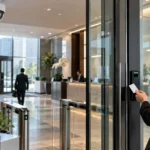
Access control closes this gap by replacing anonymous credentials with individual ones: keycards, fobs, unique PIN codes, or mobile credentials on employee phones. Each entry is logged with a name and time, a departing employee’s access dies in seconds, and restricted rooms like drug storage in a Frisco dental clinic or the server closet in a Richardson office get their own rules. For a typical small business, keypad-based control starts around $500 to $1,200 per door installed; card and mobile systems run $1,500 to $4,000 per door.
Gap 4: Is Anyone Watching the Inside of Your Business?
Most security spending points outward, at burglars. For restaurants, retail, and warehouses, the larger and steadier loss is usually internal, and it thrives precisely because interior spaces carry no monitoring.
Industry loss-prevention research has long attributed a major share of shrink to employee theft, and the field pattern in DFW matches: it concentrates where cash, inventory, and zero oversight meet. The back office with the safe. The stockroom. The bar. The loading area between the truck and the shelf.
Closing this gap does not mean surveilling staff at their desks. It means putting cameras and access logs on the specific rooms where value sits: cash offices, stockrooms, liquor and drug storage, high-value inventory cages. The deterrence effect is immediate and measurable, because opportunity, not character, drives most internal loss. When employees know the stockroom door logs entries and the cash office has a camera, the “who was in there Tuesday” question stops being unanswerable, and mostly stops needing to be asked.
Gap 5: Do Your Systems Talk to Each Other, or Just Coexist?
A camera system, an alarm, and door locks bought separately from three vendors are three partial systems, not one security posture. The seams between them are where real incidents slip through.
Integration closes the seams in practical ways:
- The alarm arms itself when the last credential badges out, which eliminates the single biggest cause of false alarms in DFW businesses: someone forgot.
- A forced door or after-hours entry pulls up matching camera footage automatically, which is exactly the verification Dallas dispatch requires.
- One event log across doors, cameras, and alarm means investigations take minutes instead of a week of cross-referencing timestamps.
The hidden cost nobody discloses: buying systems separately is cheaper per quote and more expensive in total, because integrating mismatched brands later often means replacing controllers or software licenses you already paid for. If integration is in your future, buy it now even if you phase the installation. This is also where Texas licensing matters: system integration is alarm work under Texas Occupations Code Chapter 1702, and the installer should hold a DPS license you can verify. Security in DFW operates under license #B19875, and any legitimate DFW installer will hand over their number before you ask twice.
The Five Gaps at a Glance
| Gap | Typical Cost of Leaving It Open | Typical Cost to Close |
|---|---|---|
| Unverified, unpermitted alarm | Burglary loss + no police response | $100/yr permit + ~$1,000–$2,500 verification |
| Wrong or unwatched cameras | Unrecorded theft at docks, offices, receiving | $2,500–$6,000 commercial camera coverage |
| Key and code sprawl | Untraceable entry, denied insurance questions | $500–$4,000 per controlled door |
| Unmonitored interior | Ongoing internal shrink, often 1–3% of revenue | $1,500–$4,000 for interior zones + logs |
| Siloed systems | False alarm fees, failed verification, rework | Often $0 extra if designed integrated up front |
How Do You Build a Security Plan Around These Gaps?
A usable security plan for a small or mid-sized DFW business is a sequence, not a binder. Five steps cover it:
- Walk the building like a thief. Start at the alley, not the lobby. Note every door, window, dock, and roof access, and where cash and inventory sit.
- Check the paper. Alarm permit status, monitoring contract terms, installer license, and what your insurance policy actually requires for claims.
- Rank the five gaps for your building. A Dallas restaurant ranks internal monitoring first; a Garland warehouse ranks docks and access control first.
- Fix in ROI order. Permit and verification changes are cheap and immediate. Structural camera and access work follows.
- Get one licensed installer to design the whole thing, even if you phase the spend, so every phase integrates instead of colliding.
What Does This Look Like in a Real DFW Business?
A Dallas restaurant group suspected internal theft at one location: liquor costs ran four points higher than its sister stores with identical menus. The building had cameras, all pointed at the dining room and entrance. The back hall, office, and liquor storage had none, and the storage room key lived on a hook by the office door.
The fix was small: a camera covering the storage corridor, a PIN-controlled lock on the liquor room with individual codes, and entry alerts after close. Liquor cost realigned with the sister stores within two months, a roughly $1,800-per-month swing at that location, against an installed cost under $3,500. Nobody was ever confronted. The gap closed, and the behavior went with it. (Details anonymized; a composite of a pattern we see repeatedly in Dallas food service.)
What Do Closed Gaps Actually Return?
The ROI on closing these gaps shows up in four ledgers. Verified alarms restore actual police response, which is the entire point of owning one in Dallas. Interior monitoring cuts shrink, and in cash-and-inventory businesses that alone typically pays for the system inside a year. Many commercial insurers apply premium credits for monitored, documented systems, and claims go smoother with a licensed installer’s paperwork behind them. And false alarm fees stop accruing once arming is automated, which matters in a city that charges escalating fees after three free false alarms per year.
Security in DFW has secured 1,200+ DFW businesses over 15 years, and the consistent finding is that most buildings need two or three targeted fixes, not a rip-and-replace. The assessment finds two or three.
FAQs
How common is commercial burglary in Dallas?
Dallas property crime runs roughly 90% above the national average per FBI data released in 2025, and commercial burglaries concentrate overnight. Rates vary sharply by police division and corridor, so check your specific area through the Dallas Police Department’s public crime reports rather than citywide averages before deciding coverage levels.
What are the biggest security gaps in small businesses?
The five most common: burglar alarms that cannot trigger police dispatch, cameras aimed away from where theft happens, untracked keys and shared door codes, no monitoring on interior rooms where cash and inventory sit, and separate systems that do not integrate. Most DFW businesses have at least two of the five.
What security systems reduce business insurance costs?
Monitored burglar alarms with central-station certificates, commercial camera systems, and documented access control are the systems insurers most often credit. Discounts vary by carrier and policy, typically low single-digit percentages. The larger financial effect is claim survival: documented, professionally installed systems make post-incident claims far harder to dispute.
Is a security system worth it for a small business ROI?
For businesses holding cash or inventory, yes, and the math is direct. Internal shrink commonly runs 1 to 3% of revenue, and targeted interior monitoring reduces it quickly. A $3,000 to $6,000 system that recovers even one point of margin at a typical DFW small business pays back within the first year.
How do I create a security plan for my business?
Walk the property from the outside in, noting every entry and where value sits. Verify your alarm permit, monitoring contract, and installer licensing. Rank the five common gaps for your building, fix the cheap high-impact items first, and have one licensed installer design the full system so phases integrate.
Do Dallas police respond to business alarms?
Only with verification. Dallas has required verified response for commercial burglar alarms since 2006: video, audio, eyewitness, or guard confirmation must precede dispatch, and unpermitted sites receive no response. Hold-up and panic alarms still get direct response. Surrounding cities like Plano and Fort Worth follow their own separate ordinances.
The Decision in Front of You
You do not need to fix five gaps. You need to find out which two or three exist in your building and close them in the order that returns the most protection per dollar. That ranking is exactly what a professional walkthrough produces.
Security in DFW offers a free on-site assessment across the Metroplex, from Dallas and Irving out to Fort Worth, Plano, and Frisco, ending with an itemized gap list and quote rather than a package pitch. Call (469) 225-3031. If your building only needs one of the five fixed, that is what the assessment will say.
Our Service Area
- Anna
- Ardmore
- Aubrey
- Bridgeport
- Briar
- Bonham
- Caddo Mills
- Carrollton
- Celina
- Commerce
- Corinth
- Denton
- Keller
- Justin
- Emory
- Farmersville
- Forney
- Fort Worth
- Frisco
- Gainesville
- Granbury
- Lantana
- Lewisville
- Lavon
- Little Elm
- McKinney
- Murphy
- Nevada
- Northlake
- Pilot Point
- Plano
- Princeton
- Quinlan
- Rhome
- Rockwall
- Royse
- Sachse
- Saginaw
- Sanger
- Sherman
- Sulphur Springs
- Sunnyvale
- Terrell
- Van Alstyne
- Prosper
- Wylie
- Weatherford