-
 May 20, 2025
The Rise of Smart Locks in 2025: Enhancing Security with Advanced Technology
Imagine a world where security and convenience are moving hand in hand. Great, right? This can be true, as 2025 has emerged as a landmark year of the smart lock revolution that offers advanced security to your businesses. Gone are the days of having extra keys or worrying about lost keychains with smart locks.
The access control system installation offers various smart locks such as voice commands, a tap, iris scanning, fingerprint scans, etc. These smart locks are powered by AI, biometrics, and seamless IoT integration, which are redefining what safety means and how they are well connected. As these technologies are emerging, they are accelerating smart devices and enhancing the smart living experience.
In this blog, explore what smart locks are, key features, technological advancements, challenges, and much more.
Table of Contents
- What are Smart Locks?
- Key Features of Smart Locks
- The Rise of Smart Locks: Enhanced Security and Advanced Technology
- Difference between Traditional and Smart Locks
- Future Innovations in Smart Locks Technology
- Conclusion
What are Smart Locks?
Smart locks are electronic devices that allow you to lock and unlock doors without needing traditional physical keys. Smart locks have developed and are offering advanced security to various businesses and future technologies such as fingerprint, smartphone app,door access control system installation, voice command, or key fob. They are easily integrated into your business network, which allows remote control and monitoring, including lights, security cameras, etc.
Smart lock offers more flexibility that secures your business and easy-to-manage access and keeps the premises safe. These locks offer advanced features such as activity logs, which track who and when individuals are entering the property, as they offer valuable information. The business owners also set temporary access for visitors or service providers without sharing the physical key.
Key Features of Smart Locks
No two smart locks seem alike, but they share many common features that offer both security and convenience. Here are the key features and functionalities of smart locks for your business security.
-
Keyless Entry
Now you don’t need to worry about losing or forgetting keys or letting someone in when they don’t have keys. Smart locks are well-equipped with a number of keypads that allow you to open the door by simply entering the code. This is beneficial when a visitor enters often and you just need a key code to enter, which adds extra security.
-
Mobile Access
Smart locks help to connect through mobile applications that allow you to lock and unlock the door frame anywhere in the world with a stable internet connection and keep track of how often visitors or guests are entering and exiting the premises. This also eliminates the need for physical keys that offer convenience and reduce the risk of lost or stolen keys.
-
Advanced Biometric Authentication
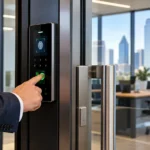
Smart locks offer advanced biometric authentication with door access control system installation. The employees add fingerprint or face recognition, which adds security and convenience for entering and exiting the building. They also keep a record of all people entering and exiting the premises.
-
Auto Locking and Geofencing
The smart lock offers an auto-locking feature that automatically locks the door after a set time and geofencing, which unlocks and locks the door automatically based on proximity to the business. These lock the door for a specified time that prevents accidental forgetfulness, which sets the time duration in the smart lock app or settings.
-
No External Wiring
Some digital smart locks have built-in alarms that trigger on unauthorized entry attempts or tampering, which offer immediate deterrence to alert those inside the business. This helps to connect with the real-time mobile app notifications, which ensure users are one step ahead of the advanced security.
The Rise of Smart Locks: Enhanced Security and Advanced Technology
Here are points on how smart locks are transforming the security landscape and advanced technology and innovation.
-
Biometric and Multi-Factor Authentication
The advanced smart locks offer fingerprint recognition, voice recognition, and facial scanning, which add the extra layer of biometric security. There are door access control system installation that support multi-factor authentication (MFA) and have a combination of passcode with fingerprint or phone where the OTP will be generated that reduces the chance of unauthorized access.
-
Integration with the Internet of Things (IoT)
Smart locks are part of a large IoT ecosystem that connects seamlessly with other smart devices such as thermostats, lights, cameras, and doorbells. This integration allows users to create automation sequences such as unlocking the door when the phone connects to WiFi or locking the doors when you activate the away mode.
-
Temporary and Customizable Access
Unlike traditional keys, smart locks help you create custom digital access codes for various people. These codes help to set up the work during specific times or days and can be deactivated instantly, which is perfect for managing the short-time visitors or employees.
-
Remote Access and Real-Time Control
The biggest leap in security is remote access control, as users can lock or unlock the doors from anywhere using mobile applications and other devices. You can also review the instant alerts if someone tries to tamper with the lock or enter using the digital key.
-
Voice Assistant and Mobile Ecosystem Integration
The access control system installation helps to control the locks using voice commands by Google Assistant, Alexa, or Siri, which adds hands-free convenience. With advanced technology, businesses can integrate with Samsung Things, Apple HomeKit, and other ecosystem services, which are part of a unified smart environment.
-
Enhanced Security Protocols
Advanced encryption protocols such as AES 128/256-bit encryption, TLS/SSL, and end-to-end encryption ensure data are transmitted between the phone and lock, which is protected from hacking. Some smart lock systems have auto-lock and tamper alarms, which secure the business even if users forget to lock manually.
Difference between Traditional and Smart Locks
Here is the difference between traditional and smart locks based on how they operate and the features they offer.
Access Methods
Traditional Locks: These locks are limited to physical keys, as if you don’t have the key, you will be locked out. The key duplication is the major issue, as anyone can access the key and make a copy, which is a serious security risk.
Smart Locks: The smart locks offer multiple access modes that include passcodes, mobile apps, biometric recognition, NFC cards, etc., that offer flexibility and convenience.
Mechanism of Operation
Traditional Locks: The traditional locks help to operate the physical key to engage or disengage the locking mechanism. These locks rely on the mechanical components such as tumblers, pins, or levers.
Smart Locks: They use digital technology that helps to control the access and can be operated using keypads, smartphones, fingerprints, voice assistance, or face recognition, such as Google Assistant or Alexa.
Security Features
Traditional Locks: The security of traditional locks is very weak as they are vulnerable to bumping, picking, or duplication of keys. Their security depends on the physical complexity and strength.
Smart Locks: These locks add extra digital layers of security such as two-factor authentication, encryption, real-time alerts, and automatic locking. They also defend against the cyber threats like data breaches or hacking.
Monitoring and Control
Traditional Locks: The traditional lock does not provide logs or feedback details. The business owners will not have any way to access the property of individuals when they are entering or exiting.
Smart Locks: The smart or advanced locks offer activity logs, remote access, and instant alerts with the connected apps that provide full control and awareness from anywhere in the world.
Installation and Maintenance
Traditional Locks: The installation methods are generally simple to install and maintain, with fewer electronic parts to worry about. But for the future, they are not that compatible and offer less ROI.
Smart Locks: These locks need compatible door setups, batteries, and occasional software updates or app management, but now these are designed for easy DIY installation.
Best Practices for Installing Smart Locks in 2025
Following are the best practices for installing the smart locks in 2025, which service provider integrates.
Compatibility and Smart Ecosystem:
Ensure the smart locks are compatible with the chosen platforms, such as Apple HomeKit, Google Home, Alexa, etc. If the platform needs a hub, then follow the manufacturer’s instructions to set it up correctly. Enable the smart lock with the right app within the smart device to integrate the lock within the system.
Professional Installation:
When integrating the smart lock in a device, businesses can offer DIY installation, but considering professional installation, they offer optimal security and functionality for complex door types.
Robust Security:
Businesses must prioritize the smart locks with anti-tampering alarms, strong encryption, and durable construction to enhance security.
Battery Life and Power Solution:
Choose the smart locks with long battery life and reliable emergency power solutions to ensure uninterrupted operation. Opt for smart locks that use slim AAA batteries for easy replacement.
Future Innovations in Smart Locks Technology
Here are future trends and innovations in smart lock technology, which are evolving and making space in the digital era.
Integration with Artificial Intelligence and Machine Learning
New technologies are evolving, like AI and ML, which play crucial roles in biometric door locks, which improve the security and functionality of smart locks. AI-based locks learn to adapt to new routines of authorized users and know who is entering and exiting. The ML algorithm predicts the lock maintenance service, like software updates and battery replacement.
Increase connectivity with IoT devices
The Internet of Things (IoT) device creates interconnection devices that allow seamless communication and interaction between smart lock devices. The upcoming biometric door locks integrate with devices like thermostats, lighting systems, and security cameras.
Enhance Biometric Technology
As technology evolves, businesses must integrate with smart and high-resolution sensors, as they have great sensitivity, which captures detailed fingerprint patterns. For better security, smart door locks have multiple biometric methods like fingerprint, iris, and facial recognition.
Conclusion
The rise of smart locks in 2025 is more than just shift in business transformation how to protect and interact with digital space. Smart locks redefine your business front door from simple entry point to smart and responsive gateway that offer advanced technology and better convenience. Unlock the door with advanced fingerprint, grant access remotely, or monitor activity in real time that set new standards for safety and control.
Our Service Area
- Anna
- Ardmore
- Aubrey
- Bridgeport
- Briar
- Bonham
- Caddo Mills
- Carrollton
- Celina
- Commerce
- Corinth
- Denton
- Keller
- Justin
- Emory
- Farmersville
- Forney
- Fort Worth
- Frisco
- Gainesville
- Granbury
- Lantana
- Lewisville
- Lavon
- Little Elm
- McKinney
- Murphy
- Nevada
- Northlake
- Pilot Point
- Plano
- Princeton
- Quinlan
- Rhome
- Rockwall
- Royse
- Sachse
- Saginaw
- Sanger
- Sherman
- Sulphur Springs
- Sunnyvale
- Terrell
- Van Alstyne
- Prosper
- Wylie
- Weatherford