-
 Oct 28, 2026
Can You Install Commercial Door Access Control on an Existing Door
Yes, commercial door access control can often be installed on an existing door without replacing the entire door or frame. The right solution depends on the door’s condition, existing lock, frame, available wiring, and the type of access control system you want to use.
For businesses in Dallas, Texas, upgrading an existing door can be a practical way to replace traditional keys with keycards, PIN codes, mobile credentials, or other electronic entry methods. However, not every door supports every type of locking hardware. A professional assessment helps determine which components can be reused and what needs to be modified.
Request a Free On-Site Assessment
Can Existing Commercial Doors Support Access Control?
Most existing commercial doors can be considered for an access control upgrade, but compatibility must be checked before selecting equipment.
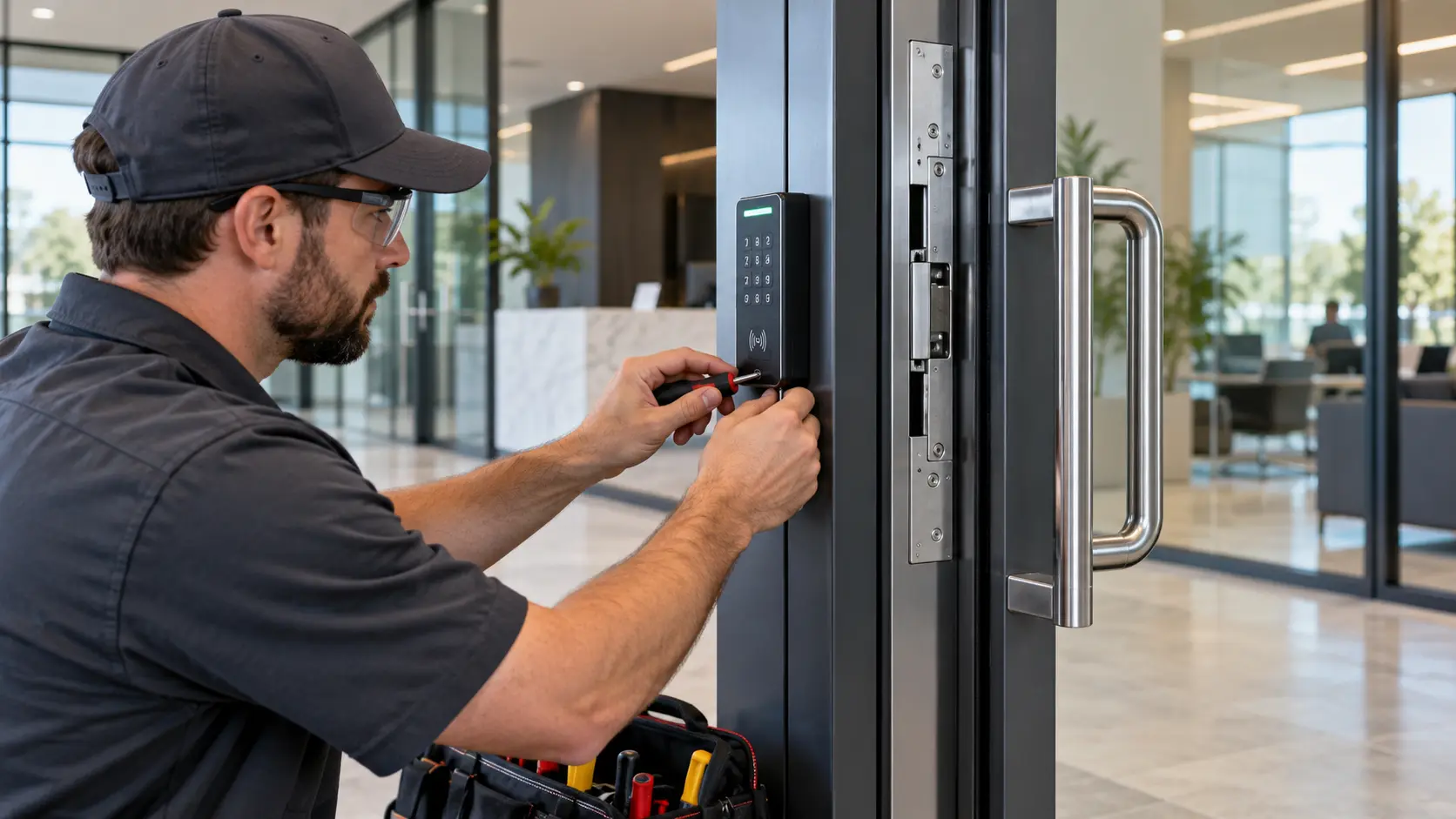
An installer should inspect the door, frame, hinges, lock, door closer, and existing exit hardware. The door must close and latch reliably before electronic locking hardware is added. Access control will not fix a door that drags, sticks, or fails to latch properly.
Other factors include:
- Door material: Metal, wood, aluminum storefront, and glass doors have different hardware requirements.
- Existing lock: The current lock or latch may be compatible with an electric strike or require replacement.
- Wiring and power: Some systems need new low-voltage cabling, while standalone or wireless options may reduce wiring requirements.
- Security needs: A staff entrance may need a different solution from a server room or restricted storage area.
- Exit and fire safety: The design must maintain the required emergency exit operation and comply with applicable codes.
In many cases, the existing door can remain in place while the locking hardware, reader, and control equipment are upgraded.
What Types of Commercial Door Access Control Are Available?
Several options are available for adding access control systems to an existing commercial door.
- Electric strikes: An electric strike replaces or modifies the strike plate in the door frame to release a compatible latch electronically. It is often suitable when the existing lock can be retained.
- Electrified locks: An electrified lever lock or mortise lock controls entry through powered locking hardware. This may be appropriate when the existing lock is incompatible or the application requires a different locking arrangement.
- Magnetic locks (maglocks): A maglock uses an electromagnet to hold a door closed. It can suit certain commercial entrances, but mounting, continuous power, emergency release, and egress requirements must be carefully evaluated.
- Standalone keypad or electronic locks: These combine access control functions within the lock or at the door. They may suit businesses that need to control one or a few doors without a larger centralized system.
- Card, fob, or mobile readers: These identify authorized credentials and work with compatible locking hardware and a controller or integrated lock.
The reader is only one part of the system. The door hardware, power supply, controller, credentials, and exit arrangements must work together.
Which Door Access Control System Should You Choose?
The best system depends on how the door is used, who needs access, and whether you want to manage multiple doors centrally.
|
Business requirement |
Option to consider |
|
Existing lock is compatible and should be retained |
Electric strike with a compatible reader and controller |
|
One or two doors need basic electronic entry |
Standalone keypad or electronic lock |
|
Multiple doors need centralized user management |
Networked access control system |
|
Employees prefer smartphone credentials |
Compatible mobile access control reader |
|
A restricted room needs tighter entry management |
Suitable electrified lock with individual user permissions |
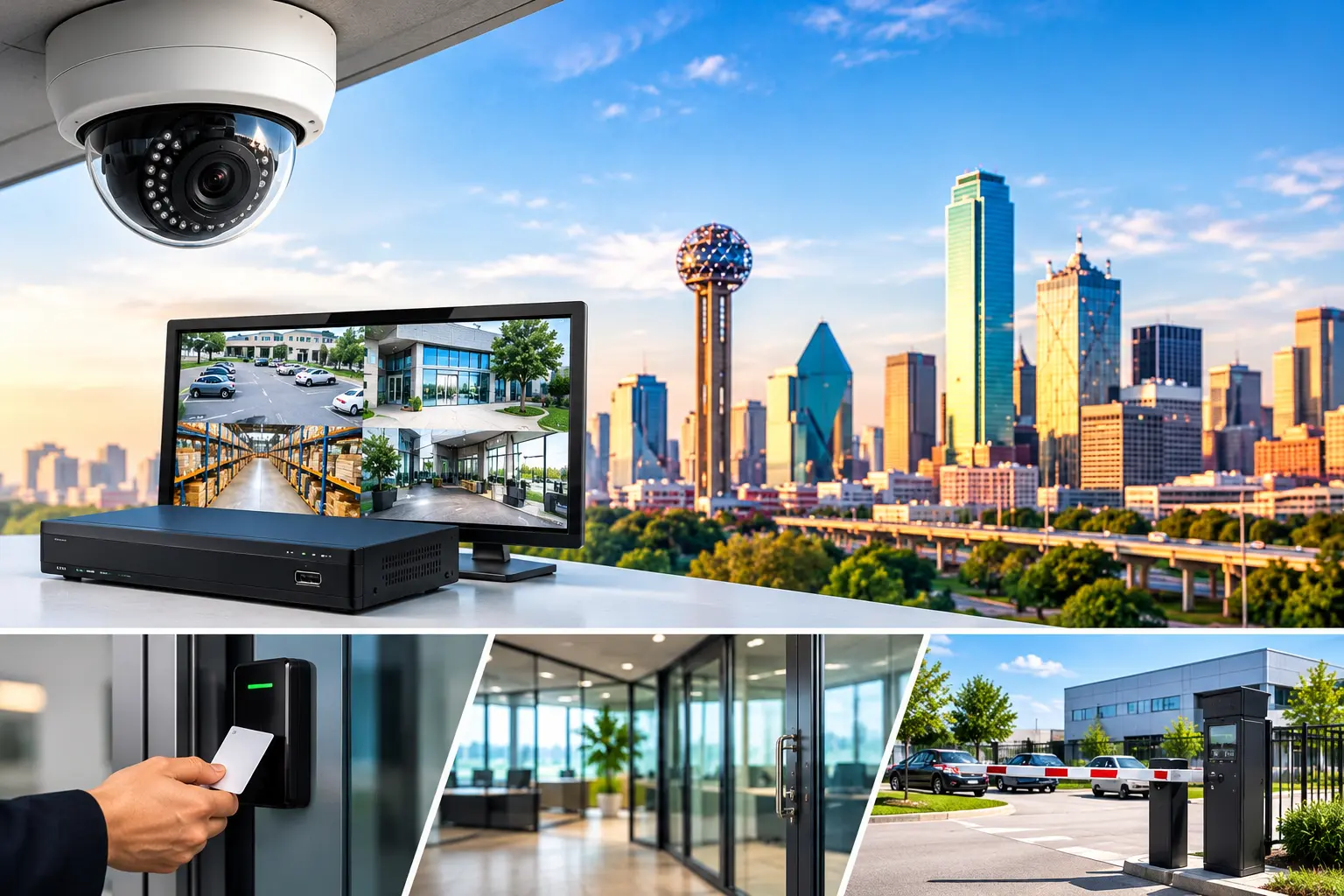
For example, a Dallas office may add a card reader to its main employee entrance while keeping the existing door and frame. A warehouse may need access control on a staff entrance and a separate controlled door for inventory storage.
Do not select a maglock or electric strike based on price alone. The existing hardware, door construction, and required emergency exit behavior determine which option is appropriate.
What Is Involved in Retrofitting an Existing Commercial Door?
A commercial access control retrofit generally involves several steps.
- Inspect the opening. Check the door, frame, lock, closer, hinges, and exit hardware.
- Choose compatible hardware. Determine whether the existing lock can remain or needs an upgrade.
- Plan the reader and wiring. Identify reader placement, cable routes, controller location, and power requirements.
- Install and configure the system. Fit the approved hardware, connect the reader and controller, and configure authorized credentials.
- Test the complete door. Verify authorized entry, secure locking, normal exit operation, door closing, and any connected monitoring or release functions.
- Complete the handover. Explain credential management, system operation, maintenance, and support arrangements.
Some retrofits require only limited modifications. Others may involve new wiring, door preparation, frame repairs, or replacement hardware. Glass doors and fire-rated openings require particular care because drilling, mounting, or changing hardware can affect the door’s suitability and compliance.
How Much Does Commercial Door Access Control Installation Cost?
The cost varies by door type, locking hardware, reader technology, wiring, and system complexity. A simple standalone keypad installation may require less infrastructure than a networked system controlling several doors.
Common cost factors include:
- Reader, keypad, or electronic lock hardware.
- Electric strikes, electrified locks, or other compatible locking devices.
- Controller, power supply, cabling, and installation labor.
- Door or frame modifications and repairs.
- Software, cloud subscriptions, and ongoing support where applicable.
Ask for an itemized quote that explains what can be reused, what must be replaced, and whether programming, testing, training, and warranty coverage are included. A site assessment is the most reliable way to establish the scope for your building.
When Should You Hire a Professional Access Control Installer?
Professional access control installation is especially important when modifying commercial doors with panic hardware, fire ratings, glass construction, or specialized locking arrangements. Incorrect hardware selection can cause unreliable locking or create serious exit-safety problems.
A qualified installer can assess the opening, recommend compatible equipment, plan power and wiring, configure access permissions, and test the completed installation. Businesses seeking commercial access control in Dallas should also ask about relevant licensing, warranties, maintenance, and support after installation.
Upgrade Your Existing Commercial Doors with Access Control
You may not need to replace your entire door to improve entry security. With compatible hardware and proper installation, an existing commercial door can often support keycard, keypad, or mobile access control.
Security In DFW helps businesses in Dallas and surrounding DFW communities evaluate their access control needs and plan practical upgrades.
Request a free on-site assessment from Security In DFW. Call (469) 225-3031 to discuss commercial door access control systems for your business.
Frequently Asked Questions (FAQs)
Our Service Area
- Anna
- Ardmore
- Aubrey
- Bridgeport
- Briar
- Bonham
- Caddo Mills
- Carrollton
- Celina
- Commerce
- Corinth
- Denton
- Keller
- Justin
- Emory
- Farmersville
- Forney
- Fort Worth
- Frisco
- Gainesville
- Granbury
- Lantana
- Lewisville
- Lavon
- Little Elm
- McKinney
- Murphy
- Nevada
- Northlake
- Pilot Point
- Plano
- Princeton
- Quinlan
- Rhome
- Rockwall
- Royse
- Sachse
- Saginaw
- Sanger
- Sherman
- Sulphur Springs
- Sunnyvale
- Terrell
- Van Alstyne
- Prosper
- Wylie
- Weatherford