A Complete Guide to Securing Healthcare Buildings with Access Control & CCTV Systems
A healthcare facility operates in constant motion, with patients moving between departments, staff accessing restricted areas, medications stored just steps away from public hallways, and confidential records flowing through the building every minute. In an environment where every second matters and every entry point holds risk, hospitals and clinics have zero margin for security errors. A single weak lock, a single blind spot, a single unsecured doorway can expose patients, staff, and sensitive medical data to extremely severe risks.
Using old-fashioned locks or poor-quality cameras is not sufficient to protect a modern healthcare facility. The current security issues require more intelligent solutions capable of monitoring, managing, and safeguarding all areas of the facility. That is where the installation of a door access control system and commercial security camera significantly increases the level of safety, compliance, and efficiency of work, providing real-time visibility, automated protection, and controlled access, which meets the stringent requirements of healthcare.
This guide simplifies all things you must know with actionable tips, which will help you to protect your healthcare environment with confidence without being overwhelmed by technicalities.
Why Healthcare Buildings Need Stronger Security Than Ever
The Rising Security Threats in Healthcare Facilities
Clinics and hospitals in the modern world are experiencing a surge of security issues that cannot be managed by conventional locks and informal surveillance. The problem of drug theft is getting more popular, and controlled substances have been the top targets of internal and external attackers. Wandering is a severe liability to patients, particularly in behavioral units or memory care, endangering vulnerable patients. Combine that with unauthorized access, lost keycards, dissatisfied visitors, and the alarming rate of violence in the workplace, and the image is clear: healthcare facilities are more susceptible than ever.
The urgency is only enhanced by real-life occurrences. Breaches are now being made in seconds, as in the case of pharmacy break-ins or attempted intrusions into ICUs. One open door or blind area in a hall will lead to a series of incidents that will affect confidence, endanger lives, and interfere with operations. That is why the installation of the door access control system and commercial security cameras is no longer optional; they have become the backbone of modern healthcare security.
Compliance Pressure: HIPAA, Joint Commission, and Industry Standards
Healthcare security is not only about threat prevention, but also about satisfying high-level, dynamic compliance needs. The protection of patient data is required by HIPAA, yet most people forget that the access to servers, nurse stations, and record rooms physically also remains a factor of compliance. The Joint Commission now considers not only excellence in patient care within the facilities, but also the effectiveness of the protection of people, pharmaceuticals, and sensitive environments.
This implies that compliance has gone way beyond paperwork. It is based on combined technology-intensive systems, like door access control system installation and smart surveillance solutions, to produce defensible and audit-ready environments.
The Critical Role of Physical Access Control and Visual Surveillance
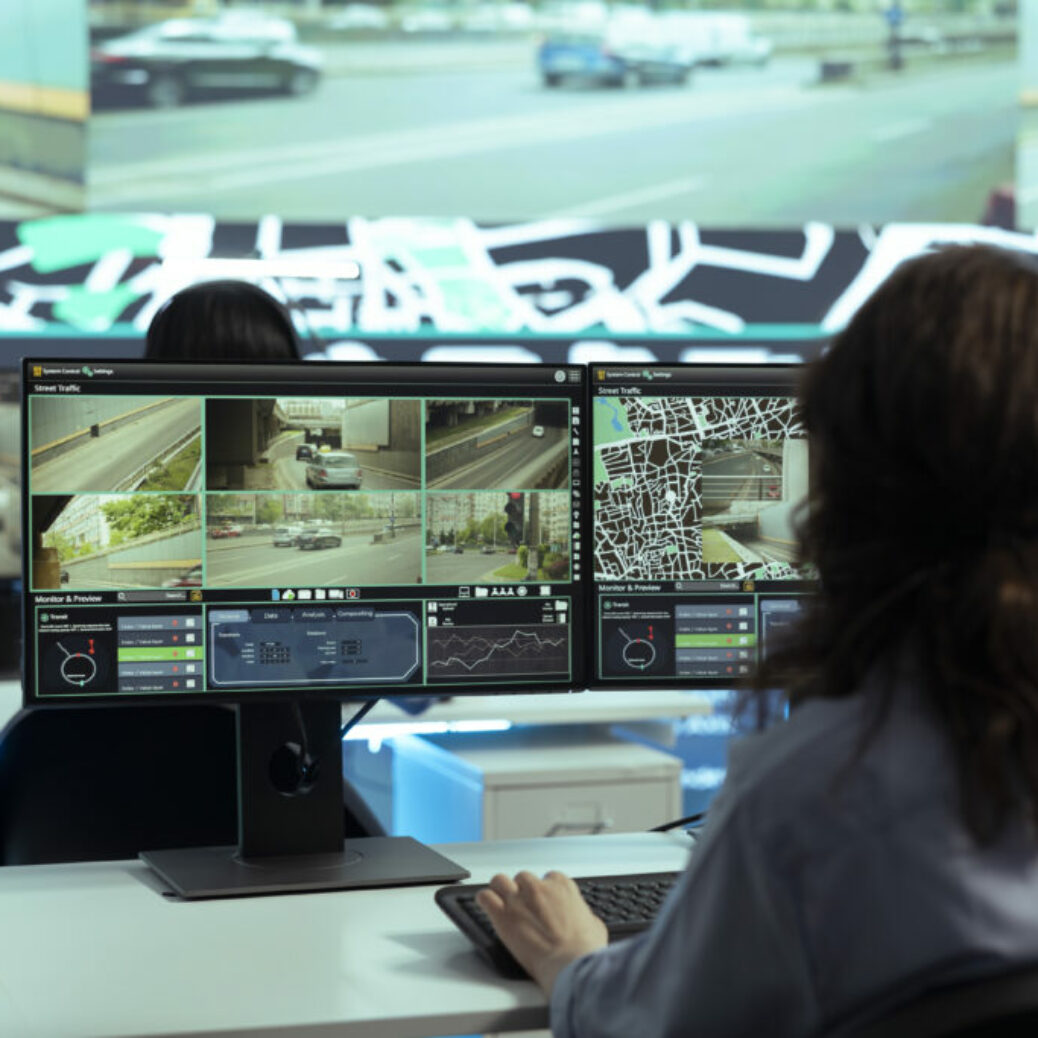
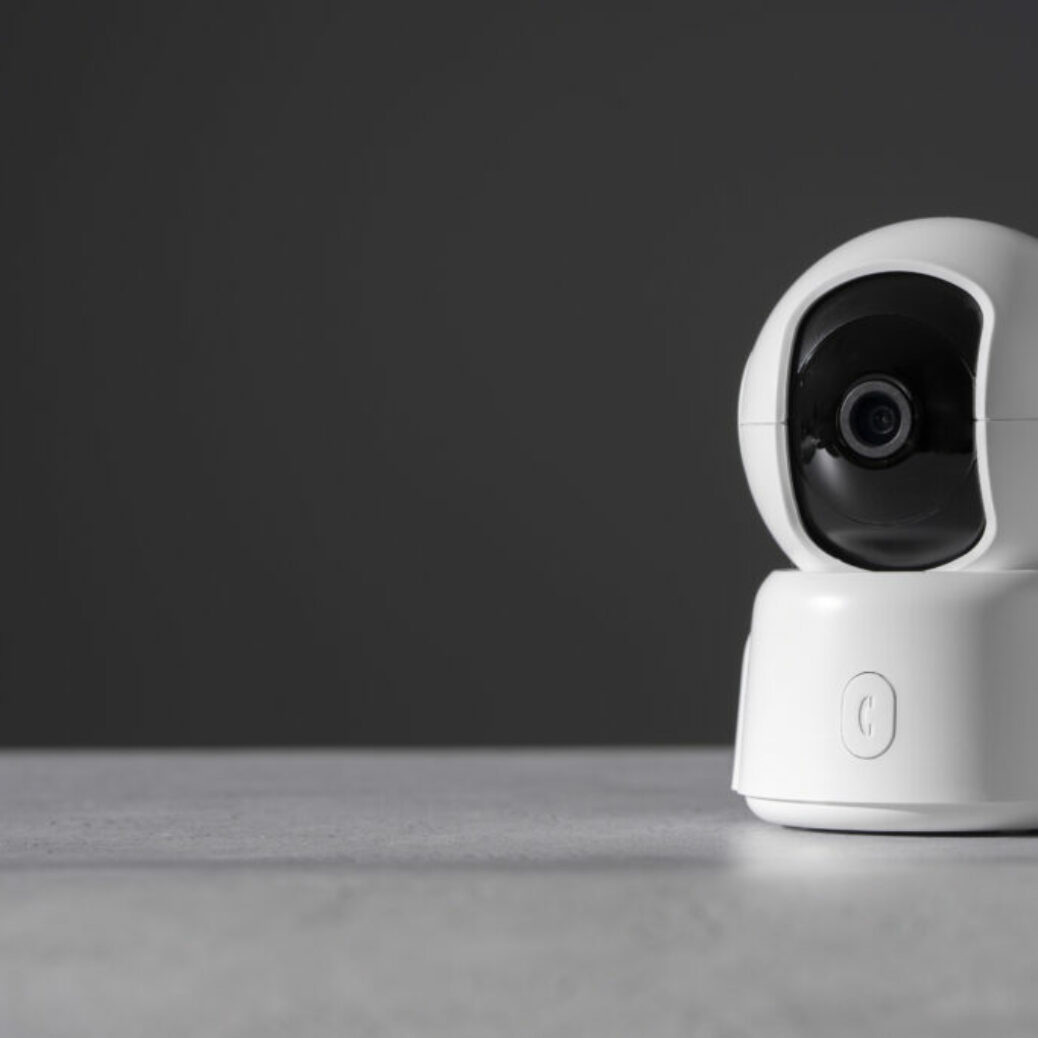
Layered healthcare security is the most effective. Physical access control provides security of doors, medication rooms, labs, and restricted wings, making sure that only authorized people can access them. In the meantime, the empty spaces that cannot be covered by the doors are filled by visual surveillance. Before it escalates into an incident, high-definition cameras are used to watch corridors, doors, parking lots, and treatment rooms to alert staff members about suspicious activities.
A combination of commercial security camera installation and a properly designed strategy of access control is an effective defense. They assist in removing blind spots, lessen risk, and create a safer environment among patients, clinicians, and administrative teams.
Understanding Modern Access Control for Healthcare
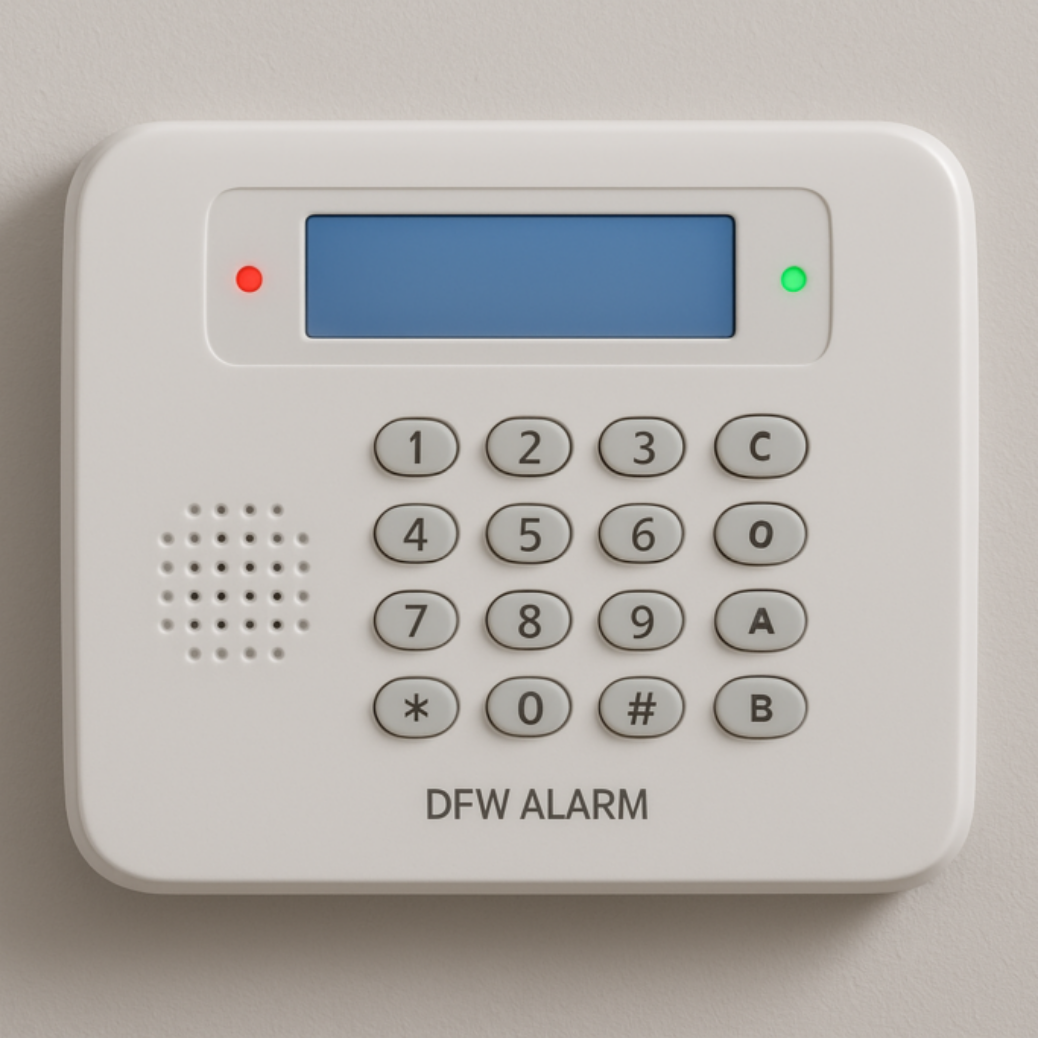
Healthcare facilities do not have the same functioning as any other business; it is a highly regulated and fast-paced environment where patient safety, staff efficiency, and data protection all rely on the controlled movement. This is the reason why modern healthcare facilities require more than conventional locks or mere keycard taps. They require intelligent systems designed to provide real-time visibility, compliance, and abiding reliability. And that begins with a professional door access control system installation that is tailored to the needs of medical settings.
Each door in the hospital, clinic, urgent care centers, and long-term care facilities has an intention, and each access point has an influence. Access control is not merely about who enters or leaves, as with medication rooms that need to remain safe, or maternity wards that need to be highly controlled, or the laboratories that deal with sensitive samples. It is all about risk prevention, patient protection, and ensuring that the operations are smooth even during the busiest days.
With the further digitalization of healthcare and the emphasis on security, access control is now collaborating with identity management, HR tools, and even commercial surveillance cameras. When all these factors combine in the right way, you have a building that protects itself automatically.
The following is the explanation of why access control in healthcare readiness is different, what systems are most frequently utilized, and why expert installation is mandatory.
What “Healthcare-Ready” Access Control Actually Means
Access control is much more than door swipes in terms of healthcare preparedness. These systems must:
- Restrict entry to maternity wards to protect newborns
- Maintain real-time access logs for compliance and incident tracking
- Support staff during emergencies
- Work seamlessly with surveillance and other security systems
To put it in simpler terms, healthcare access control needs to think, respond, and protect as fast as a medical team.
Types of Access Control Systems Used in Hospitals
Hospitals need highly secure, highly supervised systems, and that begins with an efficient door access control system installation combined with a trusted commercial security camera installation. Various access control systems are deployed in modern healthcare facilities and used to secure patients, staff, medication rooms, data centers, and restricted medical areas.
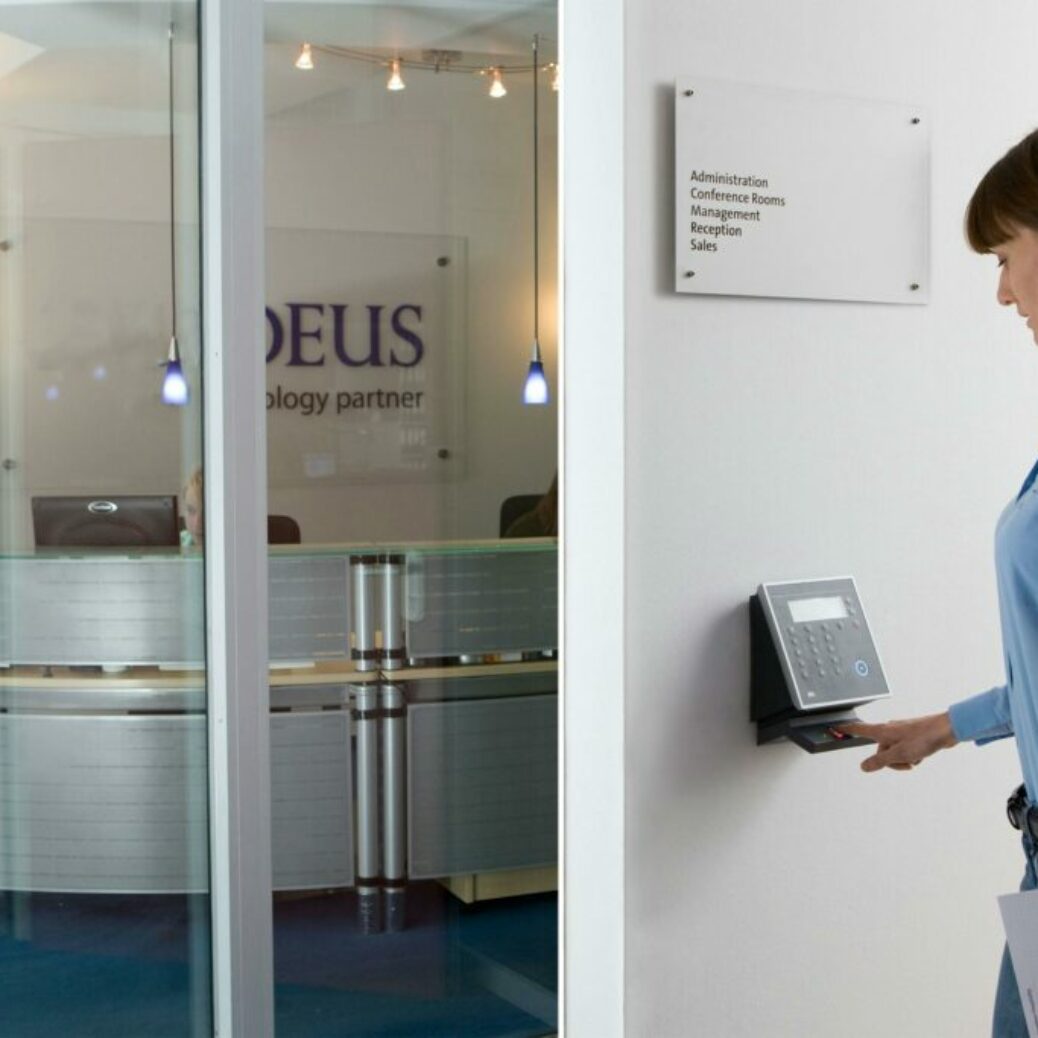
- Card-Based Access Control: Card-based systems remain one of the most widespread solutions, which give hospital staff a chance to enter the premises quickly with a one-tap or swipe ID badge. They are also efficient in large rotating teams as they can be deactivated or reassigned easily.
- Mobile Access: Smartphone-based mobile credentials eliminate the need to depend on physical cards and enhance convenience. Employees are able to use secure mobile applications to access authorized zones.
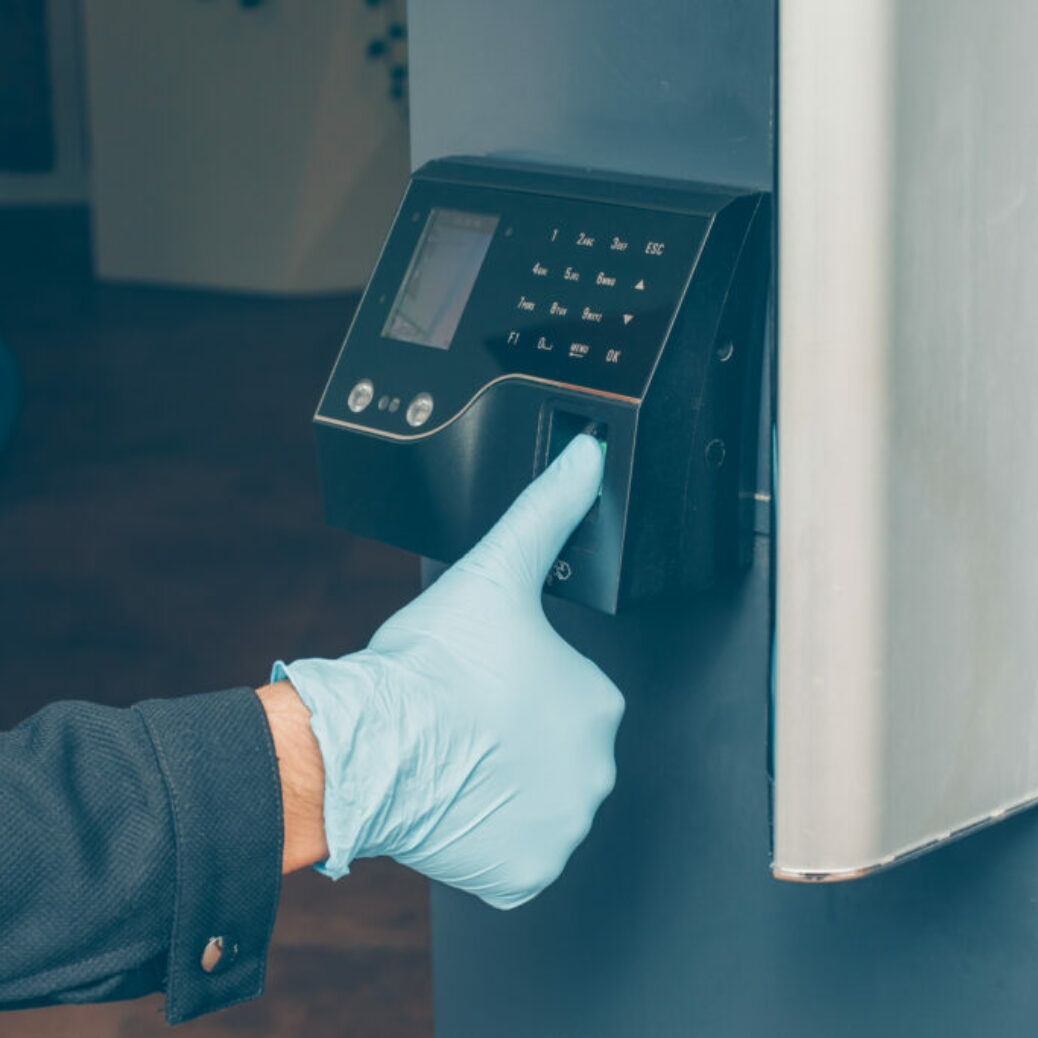
- Biometric Access (Fingerprint, Palm, Iris): Biometric systems are the most accurate in terms of identity verification. Fingerprint, palm vein, or iris scans are frequently used in areas of healthcare that are dealing with controlled substances, medical records, or laboratory research.
- Multi-Factor Authentication: Most hospitals use card and PIN, mobile, and biometric, or other layered techniques to increase security in critical zones and avoid unauthorized access.
- Cloud-Based Central Management: Access control based on clouds allows the administrator to view the access logs, control the permissions, and get real-time alerts regardless of their location. This is even more potent when combined with commercial security camera installation, which provides the security team with complete visibility of all departments of the hospital.
Key Areas That Must Be Access-Controlled
Healthcare is full of sensitive areas. The access control is used to make sure that the right individuals access the right locations at the right time.
- Pharmacies and medication storage rooms
- Patient record rooms (HIPAA compliance)
- Operating rooms and surgical suites
- Maternity wards and NICU areas
- Diagnostic labs and specimen storage
- Mechanical and utility rooms
- IT/server closets
- Staff-only entrances and break rooms
Each of those spaces is crucial to patient care and should be safeguarded with specific authorization.
Why Professional Door Access Control System Installation Matters
In the case of healthcare security, there is no such thing as DIY. The installation by the professional guarantees:
- Proper system integration with existing cameras, alarms, and HR software
- Zero downtime during installation or maintenance
- Correct credential hierarchy for doctors, nurses, and admin staff
- Compliance with healthcare building codes and safety regulations
- Seamless onboarding/offboarding for employees and rotating medical staff
Above all, professional installation guarantees that your access control system will be available 24/7 since the healthcare business is 24/7.
Combined with commercial security cameras installation, you have a layered security ecosystem that defends people, property, data, and operations with absolute precision.
FAQ’s
What type of access control system is best for hospitals?
Electronic door access control system installations are beneficial to hospitals because they support card readers, biometric authentication, and zone-based permissions. These systems enable administrators to regulate the entry of people into the patient wards, pharmacy, data rooms and operating rooms with the ability to audit and ensure compliance.
How many security cameras does a healthcare building need?
This will depend on the size of the facility, design, and risk areas. Most hospitals require between 50–100 cameras for full coverage, especially when using commercial security camera installation services to monitor hallways, entrances, emergency rooms, loading docks, and parking areas.
Can access control integrate with HR systems?
Yes. Contemporary access control platforms are compatible with HR, time-tracking, and identity-management platforms. This guarantees automatic updates when employees join, leave, or switch departments, eliminating manual work and minimizing security gaps.
Conclusion
Healthcare security is no longer a matter of common locks or outdated camera systems. It is all about building a controlled, monitored, and compliant environment in which staff members will be able to work safely, patients will be able to heal safely, and administrators will be able to operate with confidence. Professional door access control system installation and advanced commercial security camera installation can help healthcare buildings to eliminate blind spots, minimize risks, and create a robust foundation of safety. Don’t wait for a security incident to expose vulnerabilities; take action now. Strengthen your facility, protect your people, and upgrade to an intelligent, fully integrated security solution today.
Our Service Area
- Anna
- Ardmore
- Aubrey
- Benbrook
- Bridgeport
- Briar
- Bonham
- Caddo Mills
- Carrollton
- Celina
- Commerce
- Corinth
- Denton
- Keller
- Justin
- Emory
- Farmersville
- Flower Mound
- Forney
- Fort Worth
- Frisco
- Gainesville
- Granbury
- Lantana
- Lewisville
- Lavon
- Little Elm
- McKinney
- Murphy
- Nevada
- Northlake
- Pilot Point
- Plano
- Princeton
- Quinlan
- Rhome
- Rockwall
- Royse
- Sachse
- Saginaw
- Sanger
- Sherman
- Sulphur Springs
- Sunnyvale
- Terrell
- Van Alstyne
- Prosper
- Wylie
- Weatherford
HOURS OF OPERATION
Monday through Friday :
9:00 am to 6:00 pm
After hours and weekend
CORPORATE OFFICE
1509 W Hebron Parkway
Suite Number 150
Carrollton, TX 75010