-
 Sep 3, 2026
What are the 5 D’s of access control?
Access control is more than putting a lock on a business door. For a commercial property, an effective security strategy should control who can enter, identify suspicious activity, slow down unauthorized attempts, and provide a clear response when something goes wrong.
This is where the 5 D’s of access control can help. The five principles are Deter, Detect, Deny, Delay, and Defend. Together, they provide a layered approach to protecting employees, customers, equipment, records, inventory, and other valuable assets.
For businesses looking for access control in Dallas, understanding these five principles can make it easier to choose the right combination of electronic locks, keycard readers, biometric systems, security cameras, alarms, and other security technologies.
Rather than depending on one security device, the 5 D’s encourage businesses to build several layers of protection that work together.
The 5 D’s of Access Control Explained
1. Deter
The first goal is to discourage unauthorized people from attempting to enter the property in the first place.
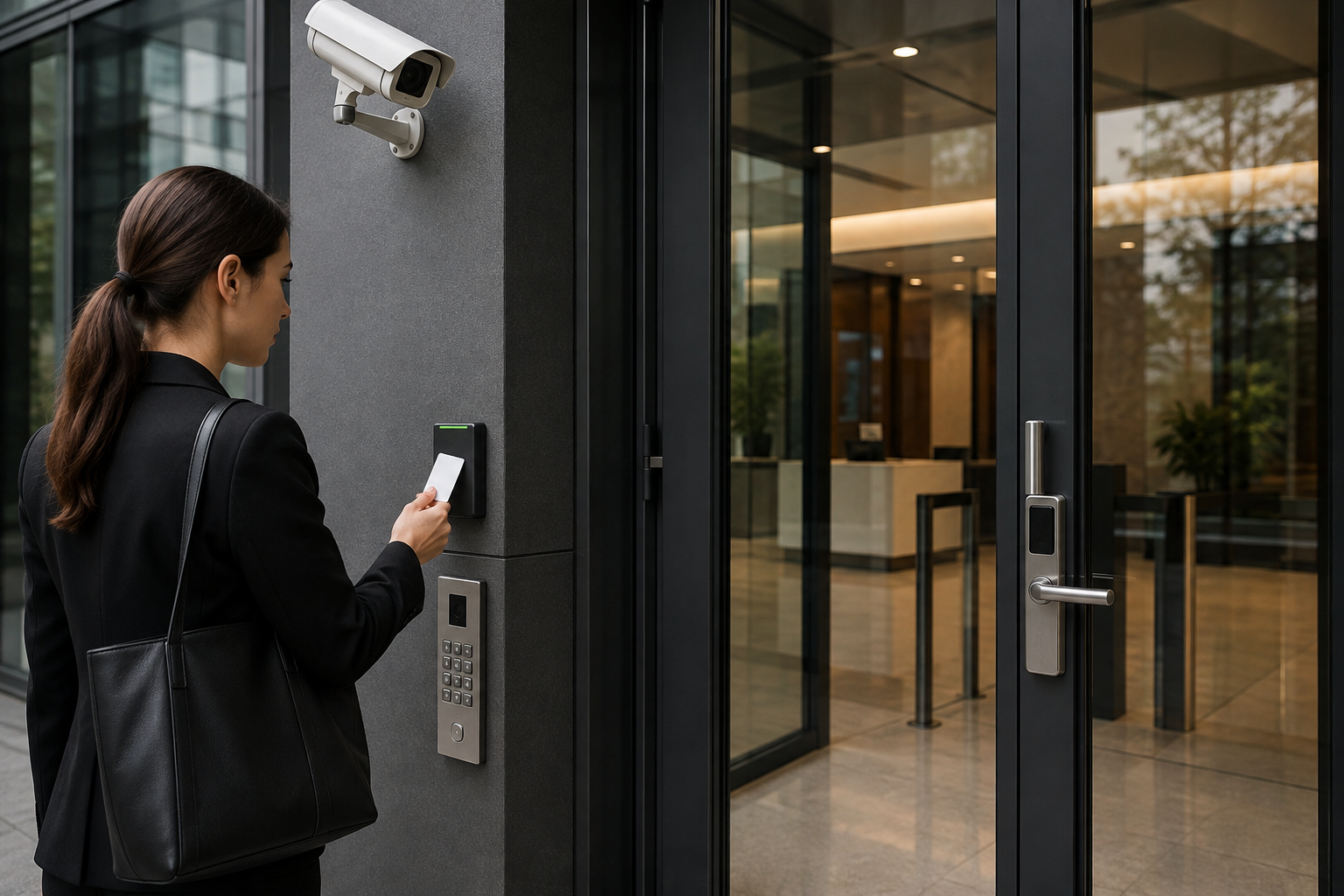
Visible security measures can make a business less attractive to someone looking for an easy target. Security cameras, controlled entry points, security signage, lighting, gates, and professional access control equipment can all contribute to deterrence.
For example, when employees and visitors can clearly see that entrances are monitored and controlled, unauthorized entry becomes more difficult and noticeable.
2. Detect
Deterrence cannot prevent every security incident, so the next layer is detection.
Detection means identifying an unauthorized access attempt or suspicious activity as quickly as possible. A modern access control system can record entry events and identify when someone attempts to use an unauthorized credential.
Businesses can strengthen this layer by integrating access control with CCTV cameras, door contacts, motion sensors, intrusion alarms, and other monitoring technologies.
For example, if an unauthorized person attempts to enter a restricted office, the system can record the access event while a connected camera provides visual information about what happened.
3. Deny
Denying access is one of the most important functions of access control.
Instead of relying on traditional keys that can be lost, copied, or shared, electronic access control allows businesses to determine who is permitted to enter specific areas.
A company might give employees access to common office areas while restricting server rooms, financial offices, inventory storage, or other sensitive locations to authorized personnel.
Depending on the business, access may be controlled using keycards, PINs, mobile credentials, fingerprint readers, facial recognition, or other authentication methods.
The goal is simple: authorized people get access, while unauthorized people are denied.
4. Delay
Security does not always stop an incident immediately. Another important objective is to slow down an unauthorized person and give employees, security personnel, or emergency responders more time to react.
Reinforced doors, controlled entrances, security gates, turnstiles, locks, barriers, and other physical security measures can create additional obstacles.
This is particularly important for businesses protecting high-value equipment, sensitive information, inventory, or restricted areas.
Even a short delay can provide valuable time for an alarm to be investigated, security personnel to respond, or law enforcement to arrive.
5. Defend
The final D is defend. This is the response layer of the security strategy.
If someone attempts to bypass the first four layers, the business needs a plan for responding to the incident. Depending on the situation, this could include security personnel, remote monitoring, alarm notifications, video verification, emergency procedures, or contacting law enforcement.
Technology plays an important role, but people and procedures matter too. Employees should know what to do when an alarm activates or when suspicious activity is identified.
A strong security system does not simply detect a problem. It helps the business respond appropriately.
How the 5 D’s Work Together
The real value of the 5 D’s comes from using them as a connected strategy rather than treating them as five separate security products.
Imagine a person attempts to enter a commercial building without authorization.
First, visible cameras, controlled doors, and security signage may deter the attempt. If the person continues, cameras and access control records can detect the activity. The electronic lock can deny access. Reinforced doors and additional barriers can delay further attempts. Finally, alarms, monitoring, security personnel, and established emergency procedures can help defend the property.
This layered approach is often referred to as defense in depth. The idea is that if one security measure fails, another layer remains in place.
How Businesses Can Build Layered Access Control
Every business has different security requirements, so there is no single access control system that works for every property.
A good starting point is to identify the areas that need protection and determine who should have access to each location.
A layered commercial security strategy may include:
- Electronic door access control for employee entrances
- Keycard, PIN, mobile, or biometric credentials
- CCTV cameras at entrances and restricted areas
- Visitor management for guests and contractors
- Security alarms and door sensors
- Controlled access to server rooms and other sensitive areas
- Security gates and barriers for exterior areas
- Access logs and activity reporting
- Different access permissions based on employee roles
- Integration between access control and video surveillance
Businesses should also review access permissions regularly. When employees leave the company or change positions, their access should be updated promptly.
For organizations searching for an access control system in Dallas, TX, professional planning is particularly important for multi-door facilities, warehouses, offices, retail properties, medical facilities, and other commercial locations.
Build a Stronger Commercial Security System
Access control works best when it is part of a broader commercial security strategy. Cameras can provide visual verification, alarms can identify potential threats, and access control can determine who is allowed through a door.
At Security In DFW, businesses can evaluate their property, entry points, restricted areas, and security requirements before selecting the appropriate equipment.
If you need access control installation for a commercial property in Dallas or the surrounding DFW area, a professional assessment can help you determine where access should be restricted and which security technologies make sense for your facility.
Ready to strengthen your business security?
Contact Security In DFW to discuss your commercial access control needs and request a customized security solution for your property.
Frequently Asked Questions (FAQs)
Our Service Area
- Anna
- Ardmore
- Aubrey
- Bridgeport
- Briar
- Bonham
- Caddo Mills
- Carrollton
- Celina
- Commerce
- Corinth
- Denton
- Keller
- Justin
- Emory
- Farmersville
- Forney
- Fort Worth
- Frisco
- Gainesville
- Granbury
- Lantana
- Lewisville
- Lavon
- Little Elm
- McKinney
- Murphy
- Nevada
- Northlake
- Pilot Point
- Plano
- Princeton
- Quinlan
- Rhome
- Rockwall
- Royse
- Sachse
- Saginaw
- Sanger
- Sherman
- Sulphur Springs
- Sunnyvale
- Terrell
- Van Alstyne
- Prosper
- Wylie
- Weatherford