-
 Dec 26, 2025
Future Trends in Access Control Installation
The concept of access control is no longer limited to locking the door and issuing keycards. It has silently turned out to be one of the most intelligent business choices a company can make, defining the manner in which the employees move, how data remains secure, and how risks are prevented before they become a loss.
With the advent of technology, the field of access control installation is entering a new phase, a faster, smarter, and more connected phase than ever. Companies that know where this technology is migrating will not only enhance security but also enhance efficiency, accountability, and overall long-term expansion.
This blog discusses upcoming trends in access control installation and the particular aspect of access control systems for small businesses, as well as why it is high time to rethink the way you protect your workplace.
Why Access Control Is No Longer Just a Security Tool
Access control has long existed in the background, something installed and forgotten and seldom spoken of unless something had gone wrong. That attitude is evolving very quickly.
Modern access control systems now influence:
- Employee productivity
- Compliance and audits
- Visitor management
- Remote operations
- Cybersecurity integration
This is a powerful shift toward small and mid-sized businesses. There is no longer a need to use enterprise-level budgets in order to get enterprise-level protection. Access control installation in the future is more about smarter systems rather than larger ones.
Cloud-Based Access Control Is Becoming the Standard
The migration of on-premise systems to cloud-based platforms is one of the largest trends transforming the industry.
What’s Changing?
Conventional systems use local servers, manual updates, and physical access to make amendments. The cloud-based access control reverses that model.
With cloud systems, businesses can:
- Manage access from anywhere
- Add or remove users instantly
- Monitor entry logs in real time
- Receive automatic software updates
Why This Matters for Small Businesses
Cloud platforms eliminate costly IT infrastructure, which is being used by companies that apply access control systems for small businesses. You receive scalability and flexibility, and also reduced maintenance costs without compromising security.
Mobile Credentials Are Replacing Keycards and Fobs
Physical credentials are gradually fading away. There is an unnecessary risk posed by lost cards, stolen fobs, and shared badges.
The Future: Smartphones as Secure Keys
Mobile access control enables employees to unlock doors by providing encrypted credentials that are stored on their smartphones.
Benefits include:
- No physical cards to replace
- Instant credential revocation
- Reduced administrative work
- Better hygiene (touchless access)
Mobile credentials are no longer a nice-to-have, but they are becoming an expectation in businesses considering installing future-ready access control.
Multi-Factor Access Control Is the New Security Standard
Single-factor authentication is no longer sufficient. There is a layered future of access control installation.
What Is Multi-Factor Access Control?
It combines two or more verification methods, such as:
- Card + PIN
- Mobile credential + biometric
- Biometric + time-based permissions
Why Businesses Are Adopting It
Multi-factor systems considerably decrease unauthorized access, even in the case that one of the credentials is compromised. In the case of small businesses’ access control systems, this translates to enhanced protection without the need to have complicated administration.
AI-Powered Access Control Is Changing How Threats Are Detected
Access control is being revolutionized by artificial intelligence in the background.
What AI Brings to Access Control
- Behavior analysis (detecting unusual access patterns)
- Automated alerts for suspicious activity
- Predictive risk identification
Rather than responding to an intrusion, AI-based systems assist companies in preventing a security concern before it can escalate.
The trend is particularly useful in the case of small businesses that do not have full-time security staff keeping track of access logs.
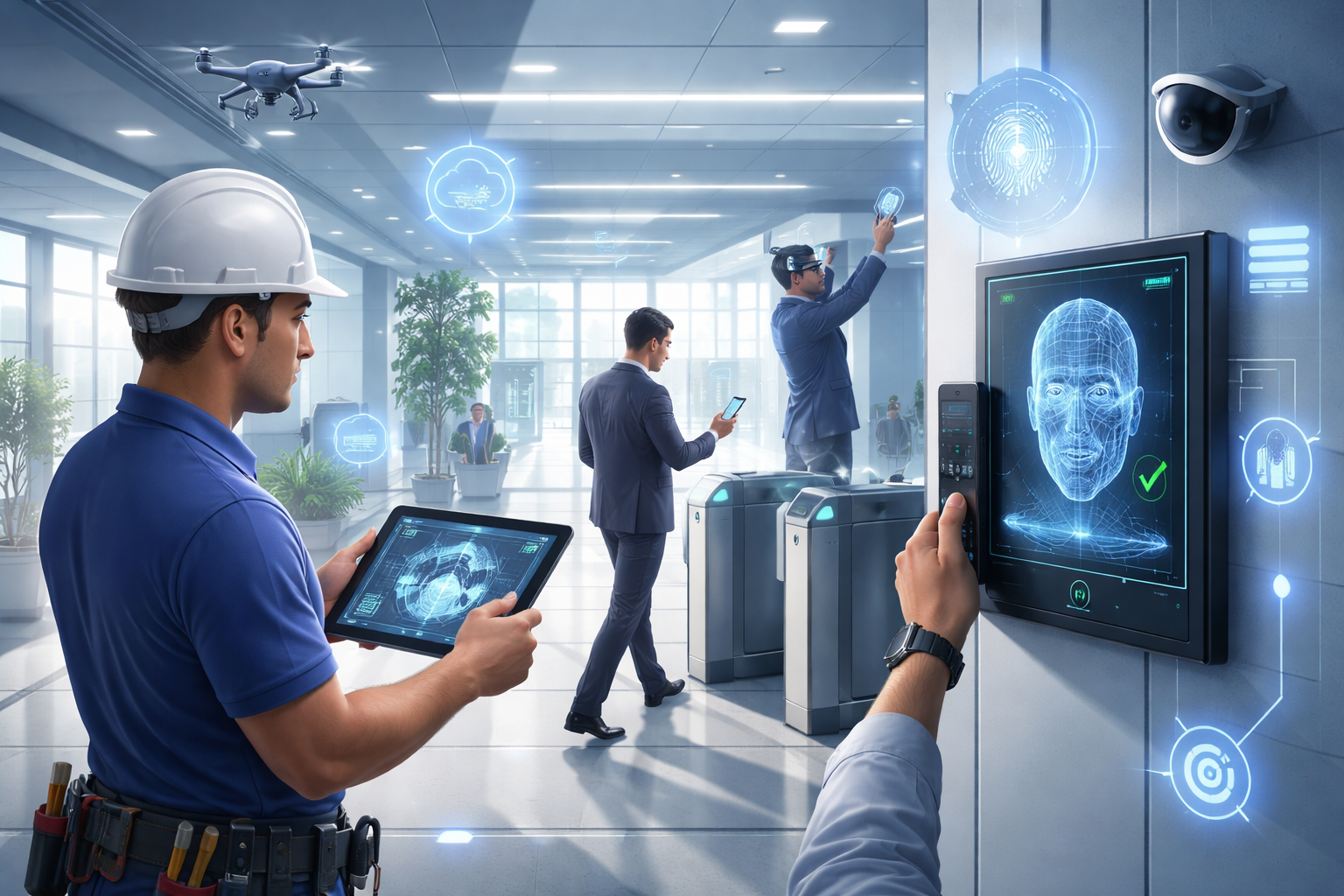
Integration with Video Surveillance and Alarm Systems
Single security tools are becoming extinct. The future lies with completely integrated security systems.
Access Control + Cameras = Smarter Security
When access control systems integrate with CCTV:
- Every door event can be tied to video footage
- Investigations become faster and clearer
- False alarms are reduced
In the case of businesses upgrading their access control installation, integration is not an option anymore; it is a competitive advantage.
Remote Management Is Redefining Business Operations
Working remotely, working in multiple places, and work flexibility have transformed the way businesses are conducted. Access control is operating.
What Remote Management Enables
- Grant or revoke access without being on-site
- Monitor multiple locations from one dashboard
- Set time-based or role-based permissions
Remote management provides control without complexity to growing companies, particularly those that have access control systems designed to secure small businesses.
Touchless Access Is Here to Stay
Health concerns accelerated demand for touchless solutions, but convenience is what’s keeping them around.
Touchless Technologies Include:
- Mobile access
- Facial recognition
- Motion-based readers
These systems improve:
- User experience
- Workplace hygiene
- Entry speed during peak hours
Touchless access control is emerging as a major component of the current installation strategy.
Custom Access Levels Are Getting More Granular
The next generation access control systems will not be based on general permissions. Rather, they concentrate on accuracy.
Advanced Permission Settings Allow:
- Role-based access
- Department-specific entry
- Time-limited credentials
- Visitor access automation
This degree of customization is needed to allow businesses to stay in control without micromanagement, which is significant when dealing with lean teams.
Sustainability and Energy Efficiency Are Influencing System Design
Security technology is also becoming greener.
Modern access control systems now:
- Use low-power hardware
- Integrate with smart building systems
- Reduce unnecessary infrastructure
Sustainable access control installation has the benefit of enhancing security and operational efficiency for businesses that are strategizing on long-term investments.
Why Small Businesses Should Care About These Trends Now
Delays in upgrading access control may silently cost businesses more than they thought in the form of inefficiencies, security loopholes, and compliance risks.
The good news?
Small business access control systems are now being developed with scalability in mind. You can begin with a small one, add the most important features, and grow along with your business.
The key to future-ready access control is not following trends, but selecting access control systems that will not be obsolete in two years.
Preparing for the Future of Access Control Installation
Access control is no longer considered a one-time security upgrade by businesses. They perceive it as a long-term investment that has to keep up with the evolving technologies, workforce models, and security threats. Companies need to look further than the current demands when planning new installations or upgrades. The success of modern access control solutions for the small business lies in the fact that they enable scalability, security, and flexibility through a single system.
The following is what progressive businesses must consider.
Prioritize Cloud Compatibility
Cloud-based access control offers businesses flexibility and control without the heavy infrastructure. Rather than having security managed by on-premises servers, cloud compatibility enables the business to track access, update permissions, and review activity in real time and at any location. This will minimize the maintenance costs, improve the reliability of the systems, and make sure that the software updates occur automatically. In the case of expanding organizations, cloud-enabled access control systems for small businesses are able to offer quicker implementation and simpler management across numerous locations.
Support Mobile and Biometric Access
The contemporary workers are demanding convenience without compromising on security. Biometric authentication and mobile credentials fulfill that requirement. Smartphones eliminate the usage of keycards, where fingerprints or face recognition are used to eliminate shared credentials. These are tools that minimize the risks of lost keys and enhance accountability. With mobile and biometric support, businesses help to optimize entry, improve user experience, and improve identity verification in offices and facilities.
Ensure Strong Integration Capabilities
The access control works optimally when it interrelates with other business systems. The combination of video surveillance, HR systems, time tracking, and alarms allows the formation of a single security ecosystem. Such connectivity enhances visibility, automates the onboarding and offboarding, and minimizes the number of manual mistakes. Companies that adopt very integrative solutions experience efficiency in their operation and also have stricter control of the people who can get in and out of their premises.
Meet High Cybersecurity Standards
With the growing digitalization of access control systems, cybersecurity is a necessity. The businesses will have to insist on encrypted data, secure authentication, and frequent updates of security. Effective cybersecurity measures safeguard the confidential data of employees and reduce unauthorized access to the system. Investment in secure platforms will guarantee compliance and protect the business operations against emerging digital threats.
Plan for Scalability and Future Growth
Companies expand, and security systems need to expand with them. Scalable access control enables organizations to add users, doors, and locations to the system without having to replace the whole system. The future-ready access control systems for small businesses facilitate growth, restructuring, and emerging technologies with low disturbances.
Future-proofing access control is not about following the trend, but making a wise and flexible decision that safeguards the current operations and future expansion.
FAQ’s
What are access control systems for small businesses?
Access control systems for small businesses are security solutions that manage who can enter specific areas, using credentials like cards, mobile access, biometrics, or PINs designed to be cost-effective, scalable, and easy to manage.
Are cloud-based access control systems secure?
Yes. Cloud-based systems use encryption, secure authentication, and regular updates, often making them more secure than outdated on-premise systems.
Is biometric access control expensive to install?
Costs have dropped significantly. Many biometric systems are now affordable for small and mid-sized businesses, especially when combined with other access methods.
Can access control integrate with existing security cameras?
Most modern access control systems are designed to integrate with CCTV, alarms, and monitoring platforms for a unified security approach.
Conclusion
Access control installation is evolving into a strategic business tool that drives security, efficiency, and growth. From cloud platforms to mobile and AI-powered features, future-ready systems help businesses stay protected without complexity. Now is the ideal time to upgrade. Contact our access control experts today to design a smarter, scalable solution that protects your workplace today and prepares you for tomorrow.
Our Service Area
- Anna
- Ardmore
- Aubrey
- Bridgeport
- Briar
- Bonham
- Caddo Mills
- Carrollton
- Celina
- Commerce
- Corinth
- Denton
- Keller
- Justin
- Emory
- Farmersville
- Forney
- Fort Worth
- Frisco
- Gainesville
- Granbury
- Lantana
- Lewisville
- Lavon
- Little Elm
- McKinney
- Murphy
- Nevada
- Northlake
- Pilot Point
- Plano
- Princeton
- Quinlan
- Rhome
- Rockwall
- Royse
- Sachse
- Saginaw
- Sanger
- Sherman
- Sulphur Springs
- Sunnyvale
- Terrell
- Van Alstyne
- Prosper
- Wylie
- Weatherford